

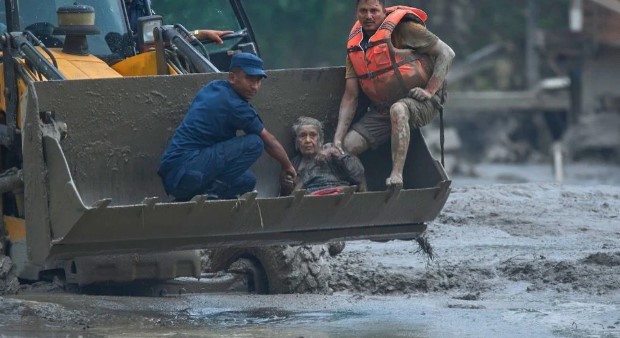
Nepal has ended its non-essential search and rescue operations 40 days after devastating floods and landslides killed at least 1,455 people and left 5,285 others missing.
The government has now shifted its focus from large-scale search operations to reconstruction, rehabilitation and recovery in the areas devastated by the August 26 disaster. Officials said the prospects of finding missing people alive after so much time had become extremely low.
The decision was taken at a meeting of the National Council for Disaster Risk Reduction and Management chaired by Prime Minister Balendra Shah in Kathmandu. Recommendations from district disaster management committees, the National Disaster Risk Reduction and Management Authority and teams that inspected the flood-hit areas were also taken into consideration.
The disaster struck on August 26 after a massive flash flood swept through parts of central Nepal. The Bhotekoshi and Trishuli river systems rose sharply, sending torrents of water and debris through settlements and destroying homes, roads, bridges, businesses and other infrastructure. Landslides also cut off roads and isolated communities in several areas.
Nepal mobilised security forces and rescue agencies immediately after the disaster, conducting searches along rivers, in mountainous areas and through debris in an effort to locate those reported missing. But despite weeks of operations, thousands of people remained unaccounted for.
According to the latest figures, 5,285 people are still missing. Among them are 189 Indian nationals. Nepal’s Department of Tourism has separately reported that 606 foreign tourists from 36 countries remain missing, including 65 Americans, 55 Malaysians, 54 Ukrainians and 37 Chinese nationals. Another 188 Nepali tourists were also listed as missing.
The government is now preparing to begin legal procedures that could allow missing people to be formally declared dead, enabling their families to complete insurance, banking and other administrative processes. Officials have also said that while active searches will end, any human remains, belongings or valuables discovered during reconstruction and rehabilitation work will still be recovered. Emergency rescue operations will continue if circumstances require them.
The government is also moving ahead with a major reconstruction programme covering damaged homes, roads, bridges and other infrastructure. The recovery effort is expected to require billions of dollars.
For families of the missing, however, the end of the official search brings little closure. Thousands are still waiting for answers about loved ones whose fate remains unknown.
The search may be over, but for the families of Nepal’s missing, the waiting continues.