

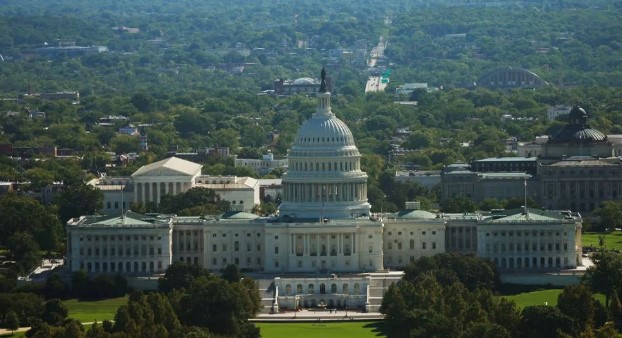
The US House of Representatives has once again voted to limit President Donald Trump’s authority to conduct military operations against Iran without congressional approval, highlighting an ongoing dispute over the constitutional balance of war powers between the White House and Congress.
The House passed the War Powers Resolution by a vote of 220-204 on Tuesday, September 15, marking the third time lawmakers have approved a similar measure aimed at ending or restricting the US military campaign in Iran. All voting Democrats supported the resolution, joined by seven Republicans.
The measure, introduced by Democratic Representative Seth Moulton of Massachusetts, directs the administration to remove US forces from hostilities against Iran, with an exception for forces needed to defend American or allied bases from imminent attacks.
Bipartisan Support
Iowa Republican Representative Zach Nunn, who supported the resolution, said the negotiating window had closed and that continued major military operations should therefore require congressional authorization.
“I will not support another open-ended war,” Nunn said.
Florida Republican Representative Brian Mast, however, opposed the measure. Mast argued that Iran remains a significant threat to the United States and questioned what military resources lawmakers would want withdrawn from the region.
Seven Republicans ultimately voted for the resolution: Thomas Massie, Tom Barrett, Warren Davidson, Brian Fitzpatrick, Nancy Mace, Mariannette Miller-Meeks and Zach Nunn.
War Has Cost More Than $38 Billion
The vote comes as the conflict approaches its seventh month. The Congressional Budget Office estimated that the war had cost the United States approximately $38 billion through July, with additional monthly costs of roughly $2 billion to $3 billion, depending on the intensity of military operations.
The conflict has also contributed to higher energy prices and broader concerns about inflation. The war has disrupted energy markets, particularly because of continuing tensions around the Strait of Hormuz.
Debate Over Presidential War Powers
The US Constitution gives Congress the authority to declare war, while the president serves as commander in chief and retains authority to conduct certain military operations.
The War Powers Resolution of 1973, enacted following the Vietnam War, sought to establish limits on the president’s ability to keep US forces engaged in sustained hostilities without congressional authorization. Under the law, congressional authorization is generally required for continued military action beyond the specified statutory time limits.
The Trump administration has argued that its military actions are lawful and necessary for national security, while supporters of the House resolution say Congress should exercise its constitutional role in authorizing continued hostilities.
The latest House vote is unlikely to immediately end the conflict. Previous resolutions have not reached Trump’s desk, and the White House has opposed the measures. Whether the Senate will take up the latest resolution before lawmakers leave Washington for the November midterm elections remains uncertain.
With the midterm elections approaching, the Iran conflict, rising fuel prices and the broader cost of living are becoming increasingly prominent issues in congressional campaigns.