
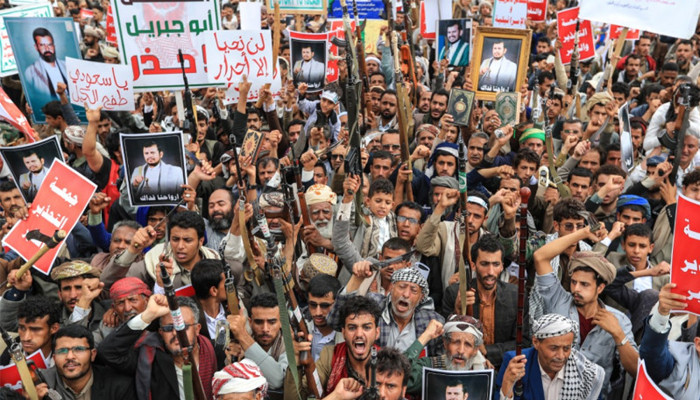
At least 30 government soldiers have been killed and 15 others injured in missile and drone attacks by Houthi rebels in Yemen. The attacks targeted military bases and troop concentrations belonging to government forces in the provinces of Marib and Hadramout on Thursday, August 6, according to local time.
The strikes are among the largest recent Houthi attacks against Yemeni government forces amid the country’s years-long conflict. The attacks have raised fears that large-scale ground fighting could once again erupt in Yemen, Al Jazeera reported.
Houthi military spokesperson Yahya Saree claimed that “hundreds” of people were killed in the attacks and that a large number of military bases and weapons depots were destroyed. He said the strikes were carried out after the Houthis detected a major Saudi military buildup.
The war in Yemen began after the Houthis seized control of the capital, Sanaa, in 2014. In 2015, a Saudi-led coalition intervened in support of the internationally recognized Yemeni government.
However, the fighting largely subsided after a UN-brokered truce took effect in April 2022. In recent months, tensions between the two sides have once again begun to rise.
The situation has become more complicated as the Houthis have announced attacks targeting Saudi ports and commercial shipping in the Red Sea as part of the wider regional conflict.
Ahmed Nagi, a senior analyst at the International Crisis Group, said the Houthis’ cross-border attacks and strikes against government forces mean the possibility of a full-scale war can no longer be dismissed. However, he said both sides still have an opportunity to contain the conflict if they choose to do so.
Adel Dashela, a researcher at the Sanaa Center for Strategic Studies, said control of Marib is strategically crucial for the Houthis. He believes the recent escalation suggests that the group may be preparing for a major military offensive toward Marib’s oil- and gas-rich areas.
Dashela warned that if a major ground offensive begins, the conflict could be even more devastating than previous rounds of fighting.
Sheikh Othman Majali, a member of Yemen’s Saudi-backed Presidential Leadership Council, said there could be no prospects for peace, security or stability in Yemen as long as the Houthi threat continues.
Yemeni political analyst Saddam al-Huraibi said Thursday’s attacks sent a clear message from the Houthis that war remains their priority.
However, International Crisis Group analyst Nagi believes Saudi Arabia and the Yemeni government are still seeking to contain the situation rather than respond with a major military escalation. But if Houthi attacks continue, pressure on them to take tougher measures is likely to increase.