
A new research-based analysis has reignited debate over US Middle East policy, arguing that nearly every American president—from Harry S. Truman in 1948 to Donald Trump—has, at various points, yielded to political pressure from pro-Israel lobbying groups.
According to the authors, domestic political considerations have often played a greater role than declared national interests in shaping Washington’s approach to the Middle East.
The analysis points to 1948, when President Harry S. Truman faced intense debate over whether to recognise the newly declared State of Israel. While Zionist organisations and political advisers urged immediate recognition, senior officials, including Secretary of State George C. Marshall, reportedly warned that such a move could fuel long-term instability in the Middle East and damage US relations with Arab and Muslim countries.
Marshall is said to have cautioned Truman against allowing domestic political considerations to determine foreign policy. Although Truman initially appeared to share those concerns, the analysis says he recognised Israel two days later, citing electoral realities. The authors describe the decision as the beginning of a recurring pattern in US foreign policy.
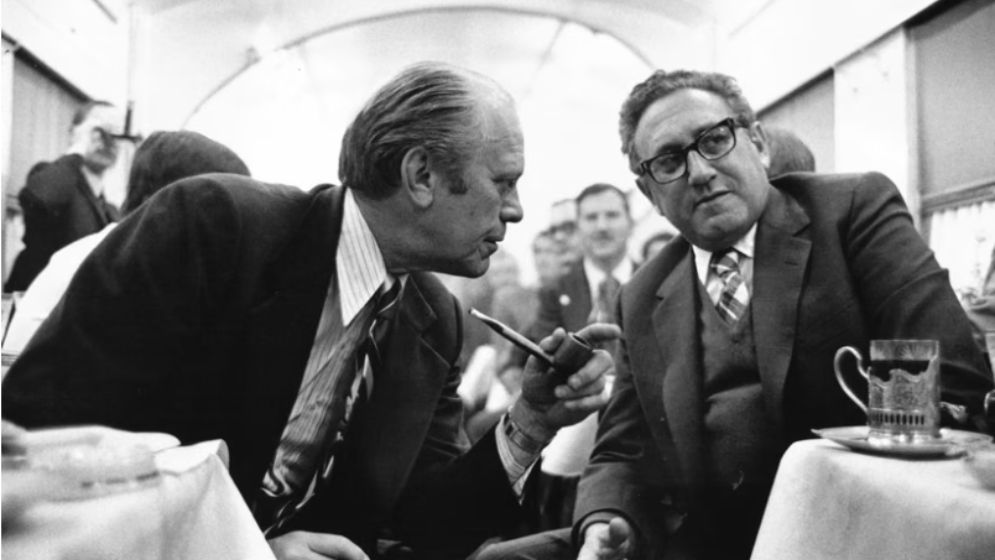
The report also examines the administration of President Gerald Ford, arguing that efforts in the 1970s to reassess US policy toward the Arab-Israeli conflict were abandoned after strong lobbying opposition. It says a policy review led by Secretary of State Henry Kissinger recommended increasing pressure on Israel to withdraw from the occupied West Bank and Gaza in support of a broader peace process. However, following an extensive lobbying campaign and a letter signed by dozens of US senators, Ford ultimately rejected the recommendations and expanded US military, economic and diplomatic support for Israel.
According to the analysis, President Jimmy Carter encountered similar resistance while promoting the creation of a Palestinian homeland as part of a comprehensive peace settlement. The authors argue that political opposition limited the scope of his initiative, leaving the Palestinian issue largely outside the framework of the Egypt-Israel peace agreement.
The study further claims that President George H.W. Bush faced intense lobbying when he attempted to use financial leverage to discourage Israeli settlement expansion. It cites Bush’s public remark that he felt outnumbered by pro-Israel lobbyists on Capitol Hill while pursuing his policy.
The authors argue that President Barack Obama also scaled back efforts to pressure Israel over settlement construction despite initially supporting a two-state solution. According to the report, opposition from the Israeli government and influential lobbying organisations contributed to a shift in the administration’s approach.
The analysis makes a similar argument regarding President Joe Biden, claiming that his administration maintained broad support for Israel during the Gaza conflict despite reported concerns from some advisers over civilian casualties.
The report also argues that public opinion in the United States has shifted significantly since the Gaza war, with growing criticism of Israel’s military operations in Gaza, Lebanon and the occupied West Bank. It says those changes have had political consequences, particularly within the Democratic Party, citing voter surveys suggesting that the conflict influenced electoral decisions during the 2024 US election cycle.
According to the authors, support for Israel has declined across both major US political parties, while candidates critical of Israeli government policies have become increasingly successful in congressional primary elections.
Despite those trends, the report concludes that pro-Israel lobbying groups continue to exercise considerable influence over US policymaking. It also notes that other well-funded interest groups play significant roles in shaping government policy and argues that concerns about being labelled antisemitic may discourage open debate on US policy toward the Middle East.
The analysis reflects the views of its authors. Many of the claims regarding the influence of lobbying organisations on US foreign policy remain the subject of ongoing political and academic debate, and there is no universal consensus on the extent of that influence.