
The first place I visited after arriving in the United States was the United Nations Headquarters overlooking the East River in New York. During Bangladesh’s War of Independence in 1971, the UN Secretary-General was U Thant of Burma. Whenever I think of that period, another image inevitably comes to mind—Zahir Raihan’s immortal documentary *Stop Genocide*.
The 20-minute film was a remarkable effort to awaken the conscience of the world in support of Bangladesh’s liberation struggle. One scene remains particularly striking: a war-ravaged naked child urinating on the United Nations Charter. It was a powerful symbol—an indictment of the helplessness and limitations of the world’s largest international organization while genocide was unfolding.
Over the decades, the United Nations has been the subject of endless debate. It has failed to stop wars in some places, failed to prevent genocide in others, and often found itself trapped by the politics of veto power. Yet it is equally true that since the end of World War II, the United Nations has remained the world’s most important platform for international law, human rights, peacekeeping, refugee protection, and global cooperation.
Bangladesh is a relatively young member of the organization. But over the past five decades, our contribution to the world has been far from insignificant. Bangladesh’s role in UN peacekeeping missions, its leadership on climate justice, and its advocacy on behalf of developing nations have all strengthened the country’s international standing. Perhaps that is why, after four decades, a Bangladeshi is once again set to assume the presidency of the United Nations General Assembly (UNGA).
In 1986, it was Humayun Rashid Choudhury. In 2026, it will be Dr. Khalilur Rahman. Between those two names lies forty years of history.
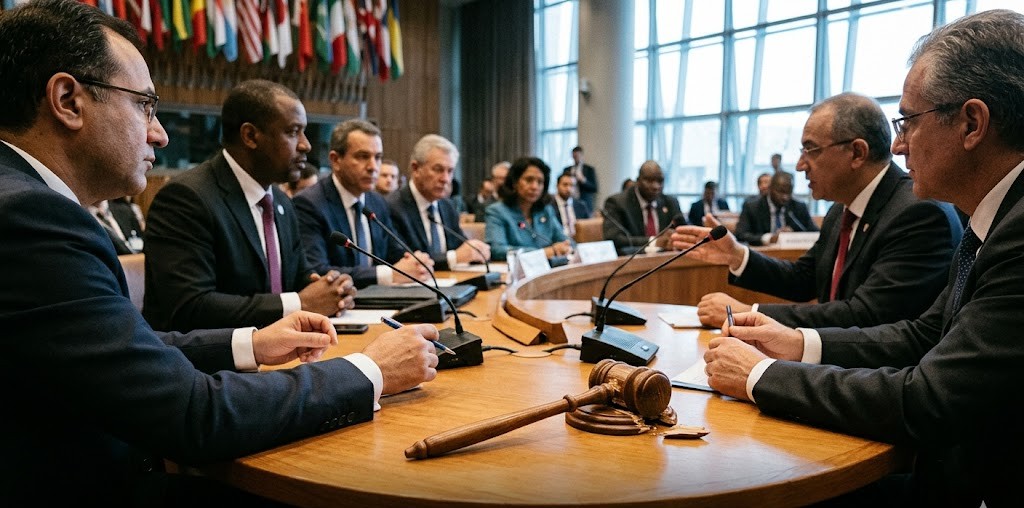
To many people, the presidency of the UN General Assembly may appear largely ceremonial. In reality, it is one of the most important diplomatic positions in the world. The office carries responsibility for presiding over sessions of the General Assembly, setting agendas, facilitating dialogue among 193 member states, building consensus during moments of crisis, and creating diplomatic bridges among world leaders.
Many mistakenly assume that the President of the General Assembly holds executive authority. In fact, that is not the case. The office does not command armies, impose sanctions, or order an end to wars. What it does provide is a forum for discussion. And in international diplomacy, a forum can sometimes change the course of history.
There are numerous examples. In 1960, Irish diplomat Frederick Boland presided over one of the most turbulent sessions in UN history. Amid Cold War tensions, Soviet leader Nikita Khrushchev famously disrupted proceedings by banging his shoe on a desk. During efforts to maintain order, the wooden gavel used by Boland reportedly broke. Yet the session continued. The incident remains one of the most symbolic moments in United Nations history.
The world was hardly peaceful during Humayun Rashid Choudhury’s tenure either. The Iran-Iraq War was ongoing. The anti-apartheid movement in South Africa was gaining momentum. Amid the divisions of the Cold War, he skillfully guided the work of the General Assembly. Under his leadership, issues such as Namibian independence and opposition to apartheid gained renewed international attention. In recognition of his contributions to world peace, he was awarded the Mahatma Gandhi Peace Prize by the College of William & Mary in the United States.
Now, history has turned its wheel toward Bangladesh once again.
When Dr. Khalilur Rahman takes the chair of the 81st session of the General Assembly next September, the world will be navigating a particularly complex period. The long shadow of the war in Ukraine, tensions between Iran and the United States, the crisis in Gaza, instability across the Middle East, climate change, food security concerns, artificial intelligence governance, and global economic uncertainty will all be pressing issues on the UN agenda.
Perhaps even more significant is another development. During Dr. Rahman’s term, the process of selecting the next UN Secretary-General will begin. This is not merely an administrative transition; it is a pivotal moment that could help shape the direction of the United Nations for the coming decade.
At the same time, tensions in the Middle East, regional conflicts, and growing global polarization are likely to influence General Assembly debates. Maintaining neutrality, ensuring all sides have an opportunity to speak, and preserving an atmosphere for dialogue will be a considerable challenge.
On the same stage, leaders including President Donald Trump and senior representatives from Russia, China, and Iran will address the world. September temperatures in New York are usually mild. How heated the diplomatic atmosphere will become, however, remains impossible to predict.
For Bangladesh, this is also a moment of opportunity. Once, we were a war-ravaged nation heavily dependent on foreign assistance. Today, we are one of the world’s leading contributors to UN peacekeeping operations, a prominent voice for climate-vulnerable countries, and a recognized participant in international diplomacy.
Whenever I stand before the United Nations Headquarters, I still think of that child from *Stop Genocide*—the child who challenged the world’s silence. Today, a diplomat from that same country is preparing to preside over the world’s largest diplomatic forum.
That is more than a personal achievement. It is a symbol of Bangladesh’s long journey and remarkable transformation.