
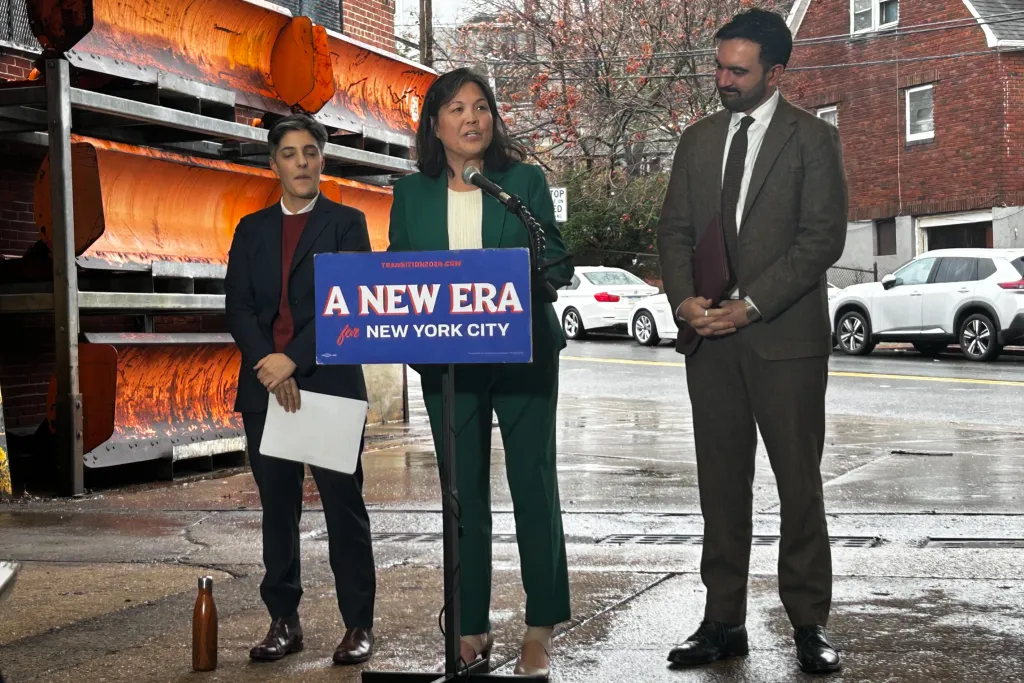
NEW YORK—The newly appointed Deputy Mayor for Economic Justice, Julie Su, has outlined a radical departure from decades of New York City economic policy, pivoting away from corporate tax incentives in favor of working-class investments.
Under Mayor Zohran Mamdani, the administration’s economic blueprint prioritizes the construction of 200,000 affordable housing units, universal childcare, and the establishment of city-operated grocery stores. According to Su, a former senior official in the Biden administration’s Labor Department, these initiatives are designed to act as primary economic engines—generating sustainable jobs while directly supporting city residents.
The strategy sharply contrasts with the business-centric approaches of previous mayors, including Michael Bloomberg, Bill de Blasio, and Eric Adams. Past administrations frequently utilized billions in tax breaks and public subsidies to court major corporations and spur mega-developments. Marking a definitive end to that era, the Mamdani administration has already signaled a halt to negotiations regarding further public funding for the multi-billion-dollar Hudson Yards expansion.
Moving forward, the administration asserts that any future tax incentives will be subject to stringent scrutiny. Subsidies will only be granted if they include strict guarantees for union labor and tangible, direct benefits for local working-class communities.
However, this ambitious progressive agenda faces significant fiscal and political headwinds. The city is currently grappling with a $5.4 billion budget deficit, while local inflation rates continue to exceed the national average. Furthermore, Governor Kathy Hochul has thus far resisted the mayor’s calls to increase taxes on corporations and high earners to fund these new initiatives.
A key test of this new direction will be the upcoming appointment to lead the Economic Development Corporation (EDC), a traditionally business-friendly city agency. The administration aims to realign the EDC’s mission to prioritize the quality of jobs created rather than sheer volume, a move that has drawn close scrutiny from local business leaders. Additionally, the mayor’s office is still weighing a campaign pledge to incrementally raise the city’s minimum wage to $30 an hour over the next several years.