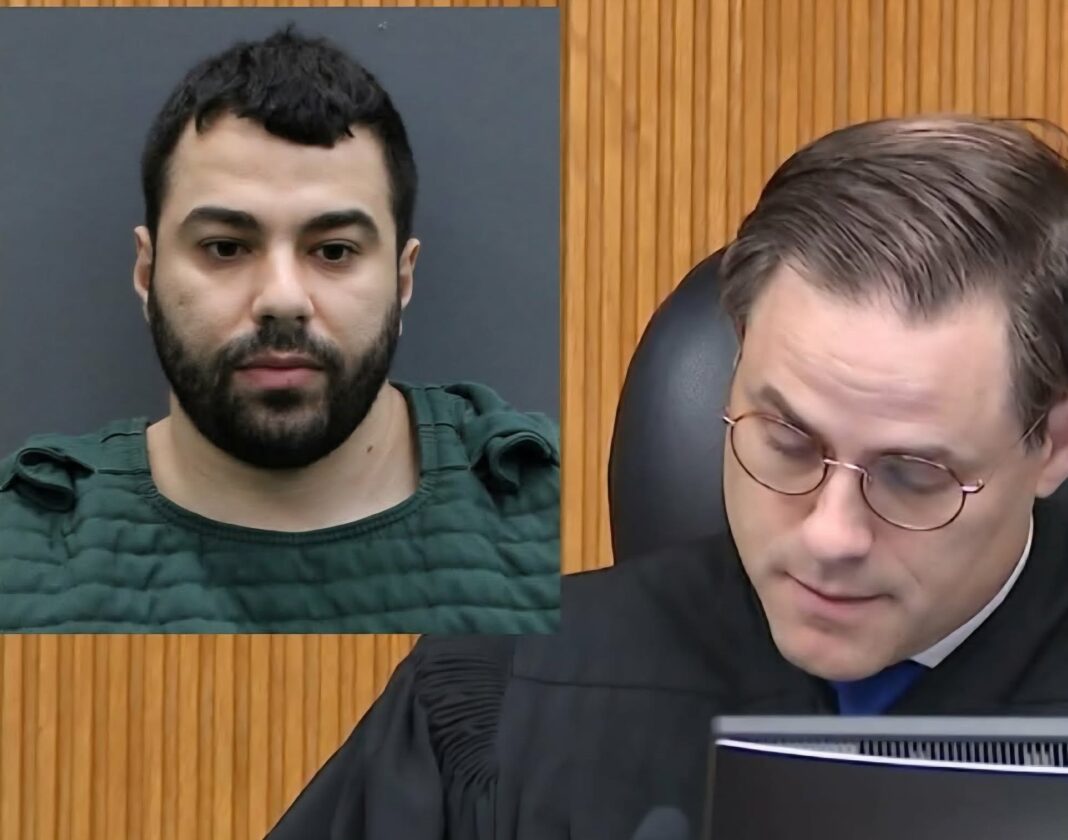

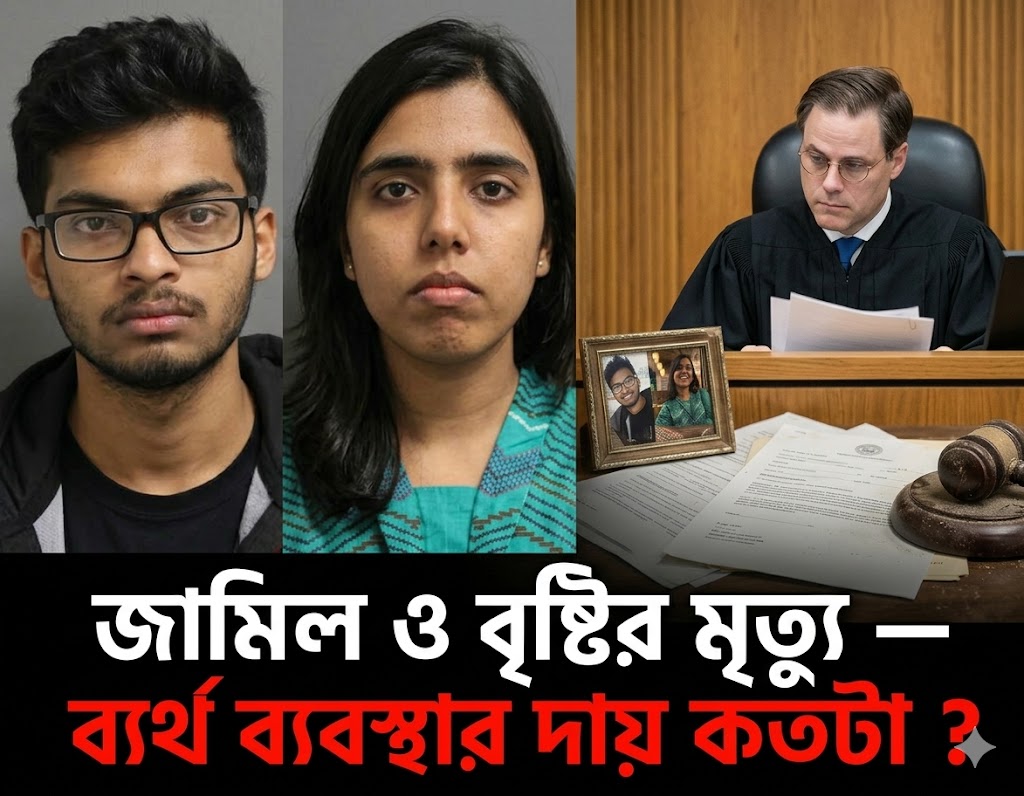
Two families in Bangladesh are grieving. Two dreams have come to a permanent end. But are these deaths solely the result of one dangerous individual’s actions? Or do they reflect a long chain of systemic failures—where warnings were raised by family members, concerns were known to the university, complaints were filed with housing authorities,
and even protective orders were sought in court—yet at every step, action stalled, got entangled in bureaucracy, or collapsed under financial constraints?
The deaths of Jamil Limon and Nahida Sultana Brishti are not just the story of a crime committed by Hisham Saleh Abugharbieh. They expose a system that had multiple opportunities to intervene but ultimately failed to save two young lives.
The warning signs surrounding a dangerous individual are now unmistakably clear. Hisham’s own mother told investigators that her son struggled with anger control and had a history of violence within the family. His younger brother, Ahmad, wrote in a 2023 court filing that Hisham repeatedly punched him in the head, drew blood, and would scream
in the middle of the night claiming he was God and that others must bow to him. He also described incidents where minor arguments led to the destruction of their home.
The family obtained a protective order in 2023. They sought another in 2025, but it was denied because the earlier criminal case had not been pursued. Why was it not pursued? Because Ahmad withdrew the case, reportedly due to the financial burden of continuing legal action. In effect, a family’s financial limitations allowed a potentially dangerous
individual to remain free. This reflects a system where access to justice is often dependent on money.
Jamil himself had recognized the risk. Before his death, he submitted a written complaint to the university, describing his roommate as “unsocial, unpleasant, and psychopathic.” This was not a casual remark—it was a formal complaint. What actions did the University of
South Florida take in response? Was a roommate reassignment considered? Was a mental health evaluation initiated? These questions remain unanswered. The university has issued a statement expressing sympathy, but it has yet to explain how it handled the warning.
The role of housing authorities is equally troubling. According to the victims’ families, complaints about Hisham’s behavior were also filed with the off-campus housing provider. Those concerns were allegedly ignored. At the apartment complex where the crime occurred, questions are now being raised about security protocols. How was a duplicate key
created so easily? Why was there no real-time monitoring of access logs? Was there any approval process at all? So far, there has been no clear response.
The legal system’s shortcomings are perhaps the most painful aspect of this case. While a protective order was granted in 2023, the denial of a second order in 2025—due to the lack of a continuing criminal case—left the family without protection. In Florida, protective orders are part of a civil process that often requires individuals to bear legal costs
themselves. Families without sufficient resources face significant barriers. Despite clear signs of repeated violence and psychological instability, there was no effective mechanism to mandate a mental health evaluation. This represents a structural flaw.
The case also raises serious concerns about the safety of international students. Jamil and Brishti came to the United States from Bangladesh with aspirations and hope. They were far from their families, navigating a new environment with limited support systems. International students often do not know where to turn in times of crisis. Do universities
adequately monitor the housing and well-being of these students? Are there safeguards in place for those living off-campus? These are questions now resonating far beyond this case.
Another critical failure lies in how mental health issues are addressed. Hisham’s behavior—delusions, uncontrollable anger, and repeated violence—suggested serious mental health concerns. Yet the system did not intervene in a meaningful way. The broader gaps in access to mental health care in the United States, especially for lower-income families,
are starkly reflected in this tragedy.
The case is now prompting urgent discussions about reform. There is a need for stricter verification processes for issuing duplicate keys in residential complexes. Universities must treat roommate complaints—especially those indicating potential psychological instability—with far greater seriousness. Financial barriers to obtaining protective orders must be reduced. International students require stronger support systems, particularly regarding housing and mental health. And there must be clearer legal pathways to mandate
mental health evaluations for individuals with repeated histories of violent behavior.
The University of South Florida is already facing calls for housing reforms. The Bangladesh embassy has reportedly engaged federal authorities in the investigation. The case is expected to move toward a grand jury before trial proceedings begin. Prosecutors have not yet announced whether they will seek the death penalty.
But beyond the legal process, one question remains. Jamil filed complaints. The family raised alarms. The courts were approached. Housing authorities were notified. Every door was knocked on. Yet every door remained effectively closed.
And those closed doors failed to save Jamil and Brishti.
The question now is whether those doors will remain closed for the next student—or finally be opened.