
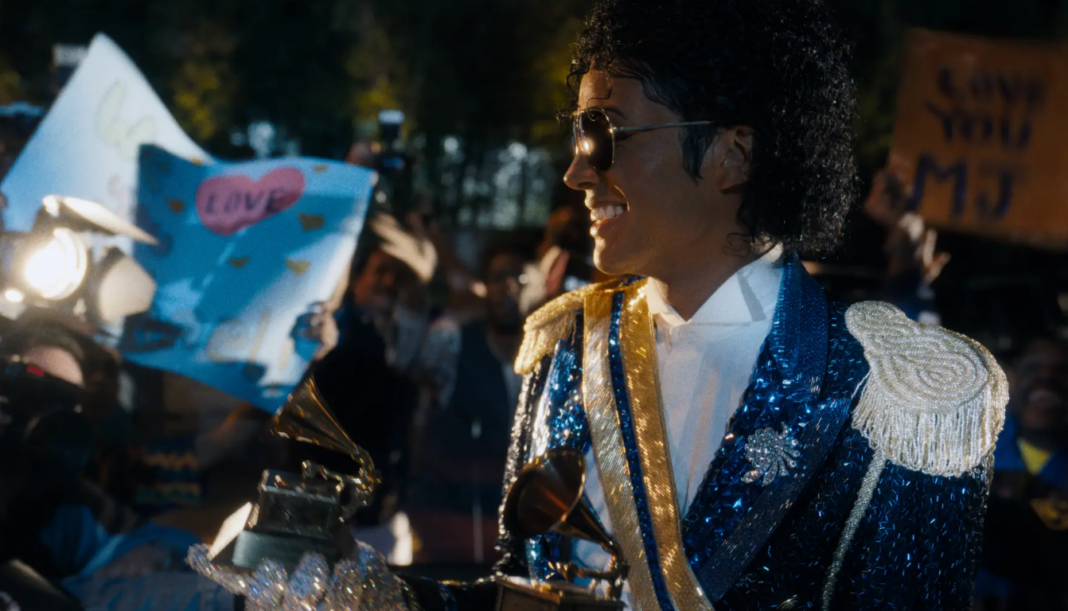
Releasing in cinemas on April 24, “Michael” tells the story of the world’s most iconic pop star. Watching the trailer, it appears to be a grand celebration—blinding stage lights, unforgettable songs, and the rise of a global legend. But behind the camera, in editing rooms over the past months, something has happened that raises a troubling question: is this a biopic, or a carefully curated promotion?
The story begins with an old piece of paper.
While reviewing documents, lawyers from the Jackson estate reportedly discovered a long-forgotten clause from the early 1990s. It was part of the settlement agreement with Jordan Chandler, who had accused Michael Jackson of child sexual abuse. That clause, according to reports, prohibited the use of Chandler’s name or identity in any film.
A small legal line—but with enormous consequences.
Almost overnight, a decision was made: the final third of the film, which reportedly dealt in detail with the abuse allegations, was removed entirely. A scene showing a police raid on the Neverland Ranch was also cut. In total, $15 million worth of reshoots were carried out—an insignificant amount for the estate’s multibillion-dollar empire.
But what was erased—can it truly be erased?
One of the most controversial chapters of Jackson’s life remains Neverland. The mysterious estate where children as young as seven reportedly slept in his bedroom, traveled with him on private jets, and accompanied him on international tours. Jackson consistently maintained that his relationships with children were innocent and pure. However, the 2019 documentary “Leaving Neverland” challenged that narrative, with two men—Wade Robson and James Safechuck—providing detailed accounts of alleged childhood abuse.
Following the documentary, several radio stations around the world stopped playing Jackson’s music. The debate intensified once again: can the artist be separated from the art?
The estate did not attempt to answer that question. Instead, it appears to have removed the question itself. The filmmakers behind “Michael” are following a familiar path. The Broadway musical “MJ” used a similar approach, focusing on the 1992 “Dangerous” tour rehearsals—before any formal allegations were made. That choice was deliberate: a period of his life free from legal controversy. The production went on to receive Tony nominations and continues to be staged globally.
The business logic is clear. Stories involving child abuse do not sell tickets. “Billie Jean” and “Smooth Criminal” do. But a biopic is supposed to confront truth—not selectively curate it for commercial success. Audiences expect complexity, discomfort, and even disturbing
realities.
Jaafar Jackson, the 29-year-old son of Jermaine Jackson, plays the lead role. The family connection is undeniable—but so is the question: can a relative portray such a controversial figure with full objectivity? The film is expected to be a box office success, aiming for numbers similar to “Bohemian Rhapsody,” which grossed nearly $900 million worldwide. Nostalgia sells. Hit songs sell. Especially when the darker chapters are carefully kept out of sight.
But one thing is certain: no amount of editing will stop the questions. Every review will return to the same issue—what was removed, what was hidden, and why.
The debate over separating the artist from the art is philosophical. But removing a central and controversial part of a real person’s life from a biopic is not just a creative choice—it becomes a question of historical omission.
Michael Jackson’s music will endure. No one denies that. “Thriller” and “Billie Jean” still give listeners chills decades later. But the shadows behind that brilliance remain part of the story—whether the film chooses to show them or not.
On April 24, the screen will light up. Michael will sing, dance, and captivate audiences once again. But somewhere beyond the frame, the unanswered questions will remain—because some truths cannot simply be edited out of history.