
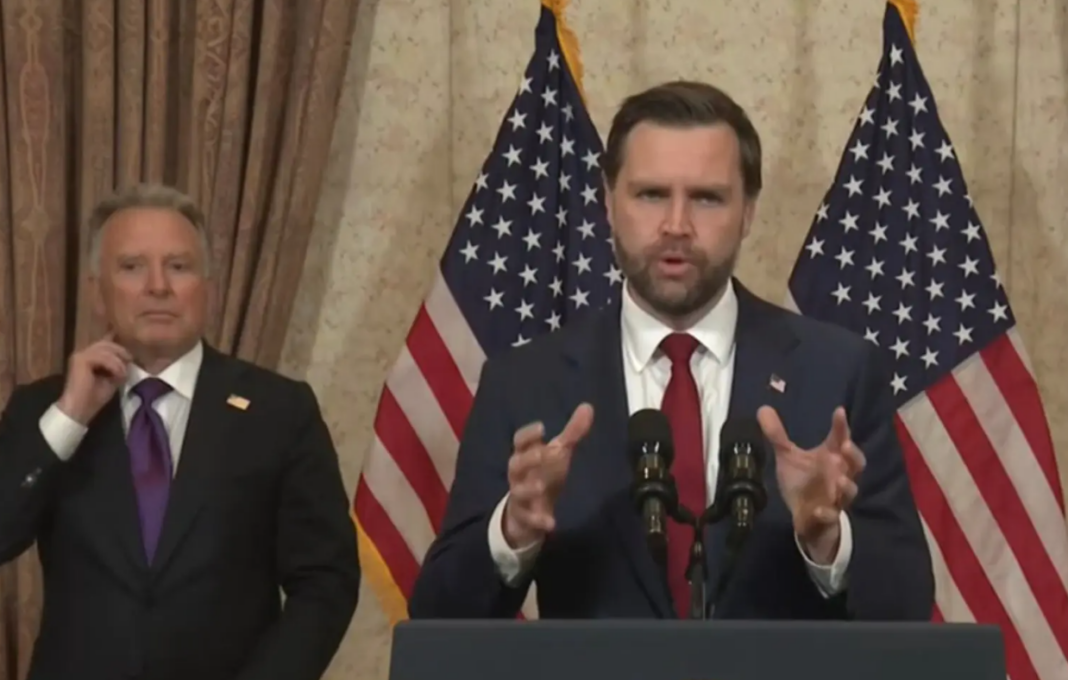
For twenty-one hours, nonstop negotiations continued. The world was watching, the oil markets were watching, people in Lebanon were watching, and those surviving amid the ruins in Iran were watching. Yet on the night of Saturday, April 11, when Vice President JD Vance stepped before reporters in Islamabad, there was no announcement of a deal—only
a single line: “We did not reach an agreement.”
Six weeks of conflict. More than three thousand lives lost. A shockwave across global energy markets. And in the end, a failed negotiation.
The talks took place inside Islamabad’s Serena Hotel throughout Friday and Saturday. Two delegations remained in separate rooms while Pakistani diplomats moved proposals back and forth. The outside world received no updates. For twenty-one hours, the world remained in the dark.
When Vance finally appeared, he said, “It is good news that we talked for twenty-one hours and discussed many important issues.” But he immediately added, “The bad news is that we did not reach an agreement. And I believe this failure is far worse for Iran than for the United States.”
That final line carries the weight of everything—a warning, a threat, and an unanswered question. Vance made clear that the core dispute was the nuclear issue. The United States demanded a clear and formal commitment that Iran would not develop nuclear weapons or acquire the technology and materials needed to build them. “That is the President’s
main objective,” he said. “That is what we came here to achieve.” Iran refused to make such a commitment.
Iran’s list of demands was equally extensive: full sovereignty over the Strait of Hormuz, the right to continue uranium enrichment, no restrictions on its ballistic missile program, and compensation for war damage. The American position moved in the opposite direction—open the Hormuz Strait, halt nuclear activities, and ensure free flow of oil
routes.
The ceasefire is set to expire on April 22. The talks have collapsed. Vance said the United States is returning “empty-handed.” President Trump had earlier warned that failure to reach a deal would mean “finishing it.” Now the question remains: what happens after April 22?
Iran remains firm on the nuclear issue. There is no sign of compromise on Hormuz. Israeli strikes in Lebanon continue. Tehran insists that without a resolution to the Lebanon crisis, no agreement will be acceptable.
Vance’s final words linger: “This is worse for Iran than for America.” Within that statement lies an unmistakable warning. Whether that warning turns into reality after April 22 is now the world’s most pressing question.
Islamabad tried. For twenty-one hours, both sides sat under the same roof. But in the end, the words did not align, the numbers did not match, and trust was already missing. The world waits again—this time in even darker anticipation.