
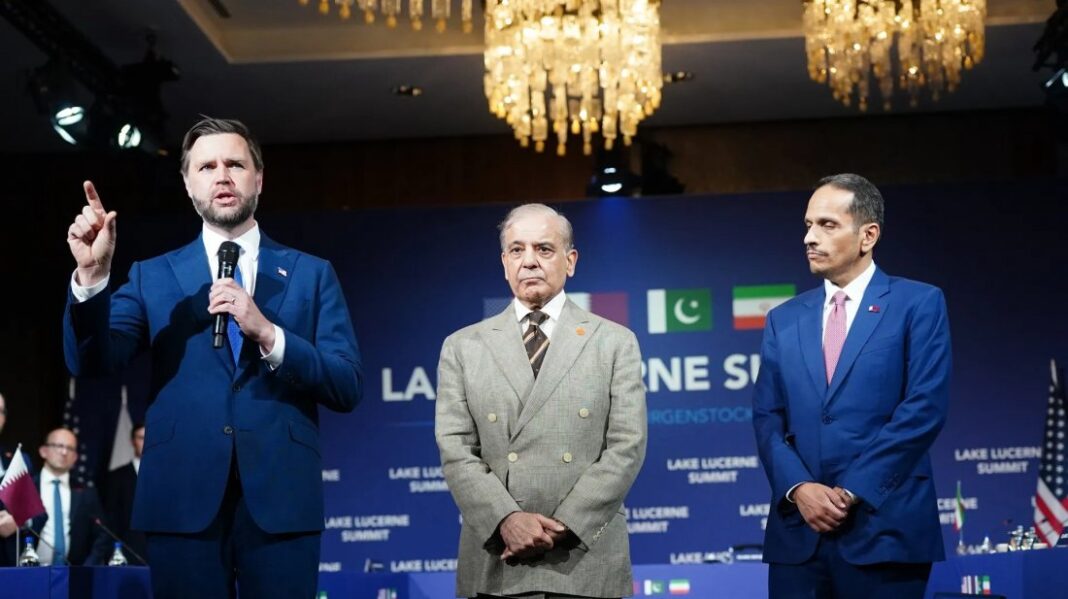
Top negotiators from the United States and Iran held marathon, late-night talks in Switzerland on Sunday, working through a 60-day diplomatic window aimed at securing a new nuclear agreement. The non-stop discussions, held along the shores of Lake Lucerne, indicate that despite significant underlying differences, both nations remain committed to the negotiating table. The meeting is also acting as a stepping stone toward a broader dialogue regarding comprehensive regional security in the Middle East.
Escalating Tensions and High-Level Delegations
The high-level talks took place against a backdrop of severe regional friction. Following alleged Israeli ceasefire violations in Lebanon, Iran had strategically threatened on Saturday to block the critical Strait of Hormuz. Despite these heightened tensions, the US delegation actively participated in the summit, spearheaded by US Vice President JD Vance alongside White House special envoy Steve Witkoff and Jared Kushner.
According to a US diplomat familiar with the behind-the-scenes developments, a primary focus of the meeting was establishing a conflict-de-escalation mechanism and enforcing a durable ceasefire in southern Lebanon amid ongoing clashes between Hezbollah and Israeli forces.
Key Focus Areas: Nuclear Elements and International Shipping Lanes
The diplomat confirmed that this opening round comprehensively covered all components of the proposed nuclear pact. Additionally, Iran’s recent warnings regarding the potential closure of the Strait of Hormuz were heavily debated.
“We explicitly communicated our commitment to ensuring this international shipping lane remains completely unobstructed. We have achieved solid progress on this front,” the US diplomat stated.
Officials from both sides engaged in detailed deliberations on the implementation of a signed Memorandum of Understanding (MoU) and how to keep all participating parties aligned on its core principles. The delegates also discussed creating a formal institutional framework to facilitate ongoing communication between political leaders and technical teams.
Mediation and Next Steps
Representatives from the United States, Iran, Pakistan, and Qatar have reportedly expressed satisfaction with the overall progress of the talks. Commenting on the role of the intermediaries, the US diplomat noted that the mediating nations are doing an exceptional job helping both sides resolve intricate issues, adding that this initial round serves as a strong foundation for building mutual trust moving forward.
While the high-level political segment of these talks is scheduled to conclude on Monday, the momentum will not stop. Even after the top political leaders depart, the technical teams from both countries are expected to remain in Switzerland for an extended period to continue detailed negotiations and bargaining.