
US President Donald Trump has claimed that a new oil agreement between the United States and Venezuela will benefit both countries and help reduce energy prices worldwide.
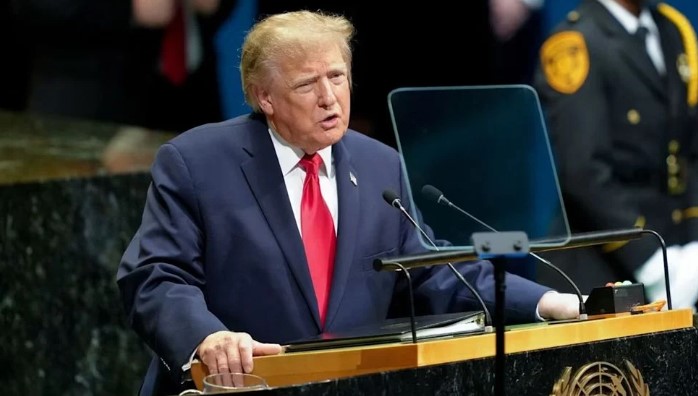
Trump made the remarks during his address to the 81st session of the United Nations General Assembly in New York. He said Washington was working closely with Venezuela’s interim authorities to help build a “better future” for the Venezuelan people.
Deal Covers 65 Billion Barrels
Trump said the two sides had signed what he described as the largest oil deal in history. According to his account, the agreement involves more than 65 billion barrels of Venezuela’s proven oil reserves and could bring substantial benefits to both countries while lowering energy costs around the world.
The White House has said the arrangement gives the United States majority control over oil reserves through a partnership involving private businesses. The agreement reportedly includes long-term rights to develop 17 Venezuelan oil fields.
However, analysts have questioned the deal’s legal structure, financial feasibility and timeline. Venezuela’s aging infrastructure and the difficulty of increasing production mean that any impact on global or US fuel prices may take years to materialize.
Reuters
+1
Trump also claimed that the United States and Venezuela together control more than 60% of the world’s oil reserves. That assertion was part of his UN speech, although the exact figure depends on how reserves and ownership are calculated.
Roll Call
+1
Trump Defends Limited AI Regulation
Turning to artificial intelligence, Trump said the United States would avoid imposing overly restrictive regulations on the technology and would instead encourage innovation.
He acknowledged that major technological breakthroughs could create challenges for humanity, adding that the development of superintelligence would be no exception.
Trump also criticized what he described as excessive warnings about climate change and AI. He argued that some people who had previously predicted catastrophic consequences from global warming were now making similar warnings that AI could destroy humanity or lead to attacks by robots.
His comments reflected his broader position that technological development should be encouraged rather than constrained by extensive government regulation.