

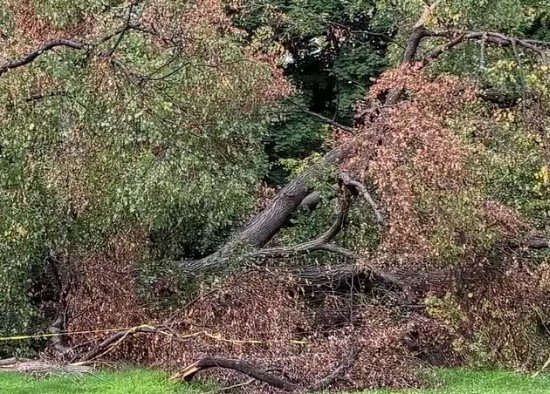
New York City is seeing a dramatic increase in damaged and fallen trees this year as more frequent and intense storms put growing pressure on the city’s urban forest.
According to the NYC Parks Department, crews completed 11,020 work orders involving damaged or fallen trees during the first seven months of the year. That is more than double the average of 5,437 such requests completed during the same period over the previous three years.
The city has already experienced three severe weather events that generated more than 1,000 tree-related service requests—on February 22, June 6 and July 3. Over the past decade, the city averaged only about one such event per year.
Strong winds and saturated soil are major factors
Adriana Jacykewycz, chief of forestry operations at the Parks Department, said severe weather can place enormous stress on trees.
High winds can put enough force on branches, trunks and other parts of a tree to cause them to break. Heavy rainfall can also saturate the soil, weakening the ground around roots and making trees more vulnerable to falling.
Regular inspections and maintenance are therefore an important part of the city’s effort to reduce risks. But even healthy trees can be brought down when wind speeds become extreme, Jacykewycz said.
After major storms, Parks Department crews prioritize trees that are blocking roads, have fallen onto buildings or are interfering with efforts to restore electricity. Other reported hazards are assessed afterward according to the level of risk they pose.
Residents play an important role
New Yorkers can report damaged or dangerous trees by calling 311 or submitting a request through the Parks Department’s online system.
Officials also say residents can help protect the city’s tree canopy by taking care of trees near their homes. Regular watering, removing weeds and applying mulch can help trees remain healthy.
Deep watering is particularly important during dry periods. Newly planted trees are especially dependent on adequate moisture as they establish their root systems, although mature trees can also benefit from additional watering during prolonged dry spells.
Climate and urban conditions add pressure
Trees in New York face numerous challenges beyond severe storms. Pollution, drought, extreme heat, insects, disease and poor soil can all weaken trees. Limited space for roots and branches, as well as construction activity, can create additional stress.
Jacykewycz said the city is already seeing more frequent severe storms that are causing greater damage to its tree canopy. Rising temperatures are another factor that could influence which tree species are best suited for the city in the future.
New York City currently has tree canopy coverage of about 23.4% and has set a goal of increasing that figure to 30% by 2040 under its Urban Forest Plan.
Private arborists also seeing surge in demand
The increase in storm-related damage has also affected private tree-care companies.
Elizabeth Arce, an arborist with Arborpolitan, said the company experienced an unusually busy winter following the February storm, which brought more than a foot of snow to parts of the city along with strong winds.
She said the combination of prolonged extreme cold, heavy snow and powerful winds appeared to leave some trees in a fragile condition, causing branches and trees to break.
With severe weather events becoming an increasingly important threat to New York’s urban forest, officials say routine maintenance, quick reporting and proper care could help reduce the risks to both trees and residents.