

To survive and succeed in the age of artificial intelligence, people will need to develop new skills and learn to work with AI rather than view it solely as a competitor.
AI may not directly take away your job. Instead, a person who knows how to use AI could eventually take the position of someone who does not.
That makes learning to use AI increasingly essential. Without adapting to the technology, the future could become far more difficult to navigate.
Yet there is another side to the AI revolution—one that involves something machines cannot easily replicate: the depth of human experience and connection.
Human Experience Still Matters
Some of our deepest emotions are shaped by experiences accumulated over a lifetime—small successes and failures, extraordinary moments and periods of intense pain.
When one person seeks a genuine connection with another, fluent text generated by AI may not be enough. Generative AI systems can now write songs, novels and other forms of creative work. But will those creations truly be worth listening to or reading?
Perhaps they will.
But generative AI does not possess a lived experience of its own. It can imitate a life, but it does not actually live one. And if an artificial system is merely performing a simulated life, how many people will ultimately want a simulated companion?
That is why some professions and jobs are likely to survive—particularly those in which deep human-to-human connection is central.
Indeed, new jobs built around those connections may emerge, and their numbers could increase rather than disappear.
Humans, in other words, will continue to need other humans.
A Warning to the Class of 2026
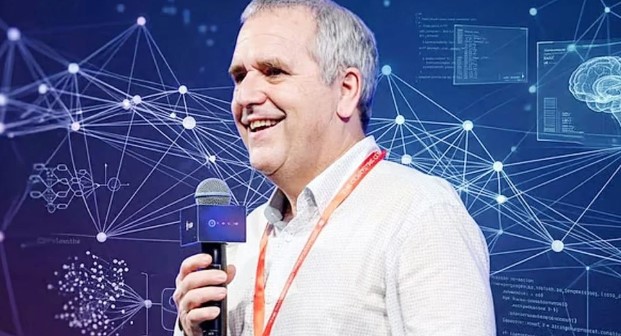
These ideas were highlighted by Michael I. Jordan, professor emeritus in the departments of electrical engineering and computer sciences and statistics at the University of California, Berkeley.
Jordan, who was recognized in 2016 as the world’s most influential computer scientist, delivered a commencement address at Berkeley in May. In his speech, he offered graduates a candid assessment of the opportunities and risks created by artificial intelligence.
“Class of 2026 graduates, congratulations,” Jordan said, while adding a note of sympathy for entering adulthood at such a complicated moment.
“You are growing up in a time that is changing rapidly,” he said. “It is difficult to predict the future, and it is equally difficult to make long-term decisions.”
He illustrated the problem with a story about a famous statistician who once faced an important choice: whether to remain on the U.S. East Coast or move to the West Coast.
A colleague told the statistician that, as an expert in statistics, he should consider all possible outcomes and choose the option with the highest expected utility.
The statistician replied: “You don’t understand. This is real life.”
An Unexpected Human Connection
Jordan then recalled his own university graduation many years ago.
He was sitting in a cap and gown when he noticed someone beside him whom he had never met during his four years at university.
They began talking.
“Somehow, it felt like we had been old friends,” Jordan recalled.
As a dull commencement speech continued in the background, the two spoke about their hopes, fears, experiences and families.
Eventually, they went their separate ways.
Yet, Jordan said, there was none of the usual sadness associated with parting. The experience taught him how unexpectedly deep a connection between two people can become when the circumstances and environment are right.
That kind of human connection, he suggested, is precisely what is difficult for AI to reproduce.
The AI Debate: Hope and Fear
Some people argue that AI will usher in a new era capable of solving humanity’s most difficult problems. Others fear that the technology could ultimately enslave humanity.
Jordan said it is understandable for people to feel confused by such radically different predictions.
He acknowledged that AI has already produced remarkable, almost science-fiction-like advances. But rather than beginning with the technology’s impressive achievements, he chose to start with the concerns.
Millions of Jobs Could Be Transformed
Jordan warned that many jobs could disappear over the next decade or undergo changes so profound that they are difficult to predict today.
Even computer programming, he noted, could be affected.
Just a decade ago, programming was widely regarded as one of the safest career choices. AI is now challenging that assumption.
The implications extend far beyond a single profession. Workers across industries may find themselves competing in a labor market fundamentally reshaped by increasingly capable AI systems.
Education Must Change
Jordan also argued that the education system needs a fundamental transformation.
For recent graduates, that prospect may sound unsettling. But he urged them to recognize that education is not something that ends once a degree has been earned.
In a rapidly changing technological environment, learning must become a lifelong process.
He also warned that inequality could become particularly severe during the early stages of the AI transition.
Existing disparities in wealth could widen, while inequalities in access to opportunities could become even more pronounced.
Deepfakes, Misinformation and Democracy
Another major concern is the growing spread of AI-generated false information, including fabricated text and images.
Jordan warned that such material is already disrupting society and that the problem is likely to persist.
The consequences could extend to democracy itself.
Labor-market upheaval, rising inequality and misinformation could provide fertile ground for anti-democratic movements to expand, potentially placing democratic institutions under unprecedented pressure.
Faced with such a troubling list of potential consequences, it may be tempting to ask why society needs technological progress at all.
Jordan said he understands that reaction.
“I grew up in the 1960s,” he noted, suggesting that skepticism toward technological upheaval comes naturally to his generation.
But despite the risks, he argued that technological progress remains necessary.
The challenge, therefore, is not simply whether humanity should embrace AI, but how people, institutions and governments can adapt to it while preserving the human connections, opportunities and democratic values that technology alone cannot guarantee.