
The Trump administration has begun to partially ease its sweeping crackdown on asylum applications, lifting suspensions for applicants from countries deemed lower risk while maintaining strict restrictions for nationals of nearly 39 countries where travel bans or heightened immigration controls remain in effect, according to officials from the Department of Homeland Security.
The blanket freeze on asylum applications had been put in place following an attack on two National Guard members in Washington last November. The suspected attacker was identified as an Afghan national
who had previously been granted asylum in the United States. Citing national security concerns in the immediate aftermath of that incident, the administration suspended all asylum applications filed outside immigration courts indefinitely, effectively freezing hundreds of thousands of pending cases.
Under the new policy adjustment, the asylum process has been reopened for applicants from countries considered lower risk, provided their cases have cleared the required screening and vetting procedures.
However, the suspension remains fully in force for nationals of countries currently subject to travel bans or strict immigration restrictions. Those individuals — drawn from approximately 39 nations — will continue to face an indefinite hold on their cases with no clear timeline for resolution.
The Department of Homeland Security said that while the process is being resumed for lower-risk applicants who have completed vetting, high-risk cases will continue to face rigorous security screening before any progress is made. The administration framed the partial reversal as a policy calibration driven by the need to ensure both national security
and public safety, rather than a broader retreat from its hardline immigration stance.
The impact of the ongoing restrictions extends well beyond asylum alone.
For nationals of countries on the travel ban list, it is not only their asylum claims that remain frozen. Applications for work authorisation, permanent residency and even citizenship have also been suspended, leaving many individuals in prolonged legal limbo with no clear path forward despite having followed the rules and applied through legitimate
channels.
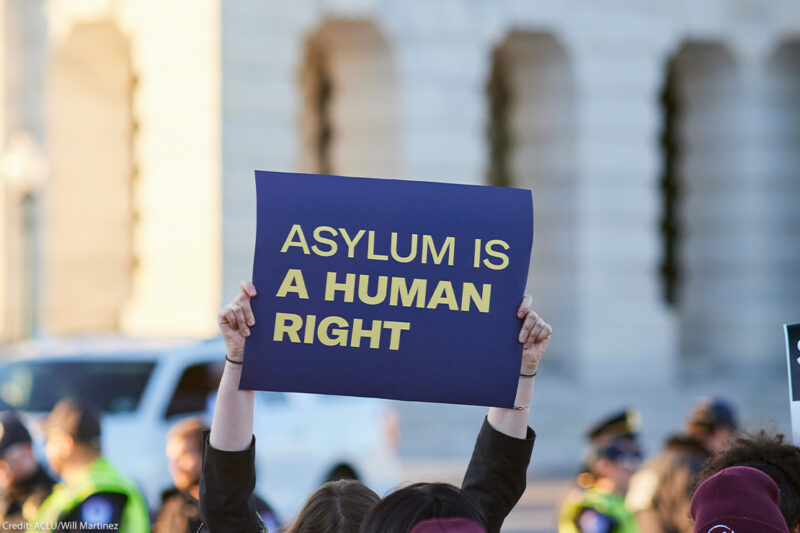
Immigration rights advocates have responded with sharp criticism. They argue that the administration’s approach is punishing law-abiding legal immigrants and asylum seekers for the actions of a single individual, and that the sweeping suspensions have caused serious harm to the broader humanitarian protection system that the United States has long been obligated to uphold. The administration, for its part, maintains that the measures are necessary to prevent immigration fraud and strengthen the integrity of the system.
For New York’s Bangladeshi community and others from South Asia and beyond, the situation remains uncertain. Those whose home countries fall within the restricted list continue to face paralysis in their immigration cases, with no indication of when or whether their applications will be processed. Advocates are urging affected individuals to seek legal counsel and monitor any updates from the Department of Homeland Security closely.