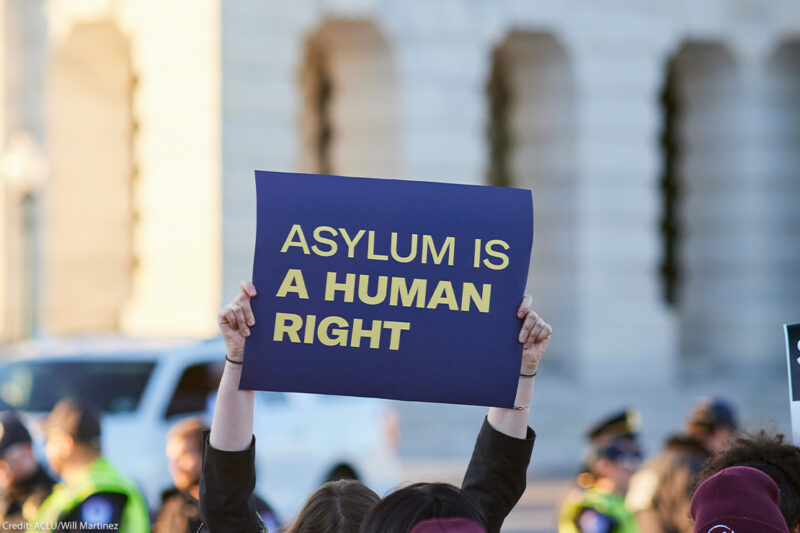

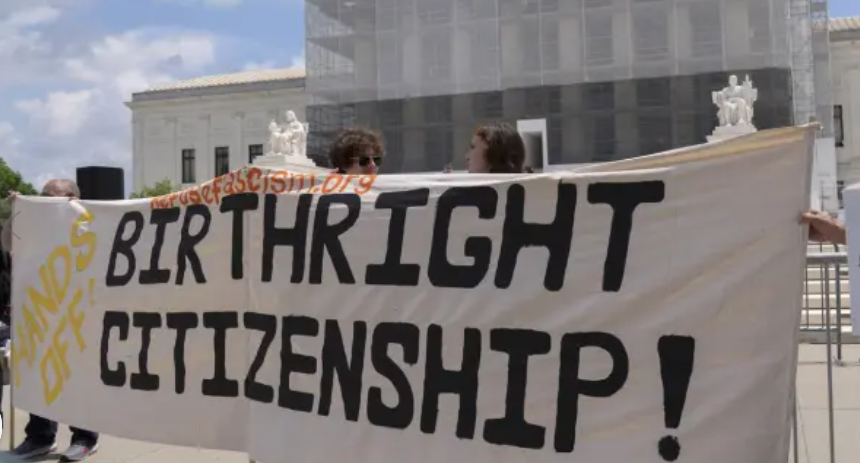
The United States Supreme Court begins hearing arguments on Wednesday, April 1, in a case that could fundamentally alter the course of American history. On January 20, 2025, the very first day of his return to power, President Donald Trump signed an executive order seeking to end the automatic citizenship granted to every child born on American soil — a
principle enshrined in law for more than 86 years. That order is now before the nation’s highest court.
This is not merely a legal dispute. It is a question rooted in the deepest foundations of the American Constitution. The first sentence of the 14th Amendment, ratified in 1868 in the aftermath of the Civil War, states clearly that all persons born or naturalised in the United States and subject to its jurisdiction are citizens of the United States and of the state in which they reside. Under that constitutional provision, and the federal laws enacted in 1940 and 1952 that reinforced it, every child born on American soil — regardless of the immigration status of their parents — has automatically been considered an American citizen for well over 150 years. Trump’s executive order challenges that entire framework.
The Trump administration argues that people in the United States illegally or temporarily are not truly “subject to the jurisdiction” of the country within the meaning of the 14th Amendment, and that their American-born children are therefore not entitled to citizenship.
Solicitor General D. John Sauer, arguing on behalf of the administration, has compared the case to the landmark 1954 decision in Brown v. Board of Education, which outlawed racial segregation in public schools, claiming that this case similarly offers an opportunity to
correct a long-standing “misconception” about the Constitution’s meaning.
However, every single court that has examined the executive order has ruled it to be illegal and prevented it from taking effect. Federal Judge Joseph N. LaPlante in New Hampshire found that the order “likely violates” both the Constitution and federal law. Supreme Court Justice Sonia Sotomayor said last year that defending the order in light of the onstitution’s text, its history, the court’s own precedents, federal law, and the long-established practice of the executive branch was “an impossible task.” She was joined in dissent by the court’s other two liberal justices, after the six conservative justices used an earlier round of the birthright citizenship dispute to limit the ability of federal judges to issue nationwide injunctions blocking administration policies.
Challenging the order on the other side are pregnant mothers and their advocates, represented by the American Civil Liberties Union. ACLU Legal Director Cecillia Wang, who will face off against Sauer in Wednesday’s arguments, put the stakes plainly: “We have the president of the United States trying to radically reinterpret the definition of American
citizenship.” Research by the Migration Policy Institute and Pennsylvania State University’s Population Research Institute estimates that if the order were to take effect, more than 250,000 children born in the United States each year would be denied citizenship.
One critical and often overlooked dimension of this case is that it not only affects the children of undocumented immigrants. The order would equally apply to people who are in the United States entirely legally — including international students on study visas, workers on employment visas, and people who have already applied for green cards or permanent
resident status. The reach of Trump’s order is far broader than his immigration rhetoric typically suggests.
The human reality behind the legal arguments was captured in the story of one woman from Argentina who came to the United States in 2016 on a student visa and has since applied for a green card. When a Supreme Court decision last June briefly made it appear that the restrictions could take effect, she was consumed by panic. “I never thought that, so
close to the end of my pregnancy, I would have to be thinking about the
executive order and how it would have impacted my baby,” she said, her
newborn son in her arms. And yet she has not reconsidered her decision
to remain in the United States. “Nothing that happens, politically or
otherwise, would have changed my views of this country,” she said,
“because it gave me the most beautiful thing I have today — my family.”
The central question now is which direction the court’s six conservative justices will move. The conservative majority, which includes three justices appointed by Trump himself, has in various instances taken positions favourable to the administration’s immigration agenda. But this case stands apart. Here, the plain language of the Constitution and 150 years of unbroken legal tradition stand directly against the executive order. That is a very different challenge from the administrative and procedural disputes where the court has previously
sided with the administration.
Three possible outcomes present themselves. The court could strike down Trump’s order entirely and leave the existing birthright citizenship framework intact — the outcome that the weight of legal precedent most strongly supports. Alternatively, the court could uphold the order in a narrow and limited form, affecting only certain categories of people while preserving citizenship for others. The third and most distant possibility — but the one with the most profound consequences — is that the court rules in favour of Trump’s interpretation, overturning 150 years of legal tradition in what would become one of the most controversial constitutional rulings in American history.
For New York’s Bangladeshi and South Asian communities, the stakes of this case could not be higher. Thousands of Bangladeshi families are living in the United States on various visa categories, pending green card applications, or under Temporary Protected Status. The citizenship of their American-born children hangs in the balance on the outcome of
this case. The Supreme Court’s final ruling is expected before the end of this summer.