
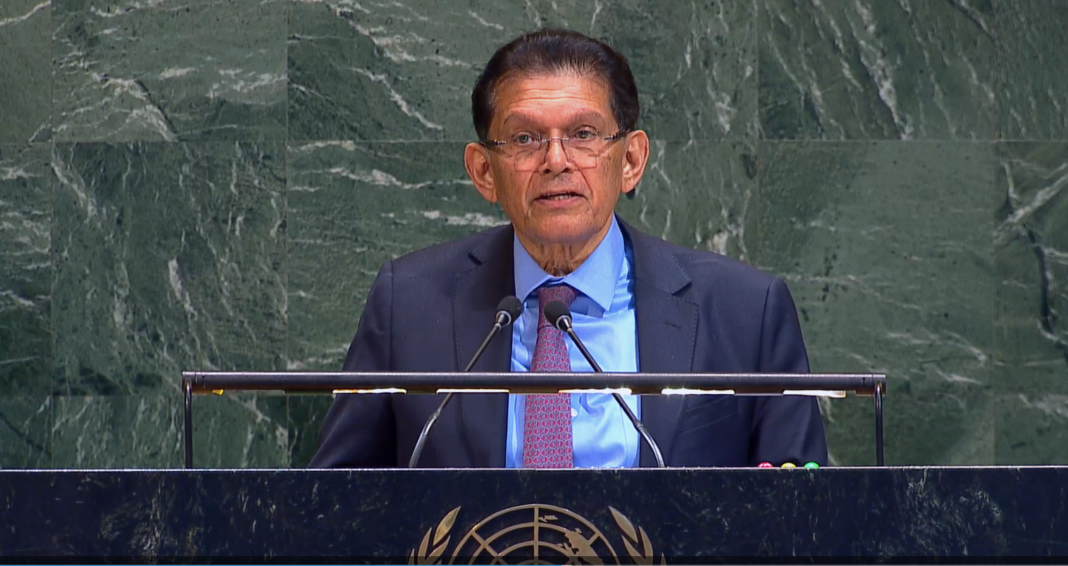
Foreign Minister Dr. Khalilur Rahman called for strengthened global efforts to confront historical injustices and eliminate slavery and oppression on Tuesday, addressing a commemorative meeting of the United Nations General Assembly on the International Day of Remembrance of the Victims of Slavery and the Transatlantic Slave Trade.
In his address, Dr. Rahman paid solemn tribute to the millions of victims of the transatlantic slave trade while also honouring the extraordinary courage and resilience of those who bravely resisted it.
He described the transatlantic slave trade as a permanent scar on humanity, reaffirming Bangladesh’s firm stance against slavery, apartheid, genocide, and all forms of oppression.
The Foreign Minister underscored that the Constitution of Bangladesh explicitly rejects imperialism, colonialism, racism, and discrimination, reiterating the country’s steadfast solidarity with oppressed peoples worldwide. His remarks carried added resonance as the international community marks the centenary of the 1926 Slavery Convention and approaches nearly eight decades since the adoption of the Universal Declaration of Human Rights.
While acknowledging that formal slavery has been abolished, Dr. Rahman cautioned that its legacy continues to permeate modern society, economy, and politics, with various forms of subjugation persisting across the globe. He stressed that the enduring impacts of the transatlantic slave trade demand more than ceremonial observance.
Calling for coordinated measures in digital forensics and greater investment in education and dialogue, the Foreign Minister outlined a concrete agenda for the international community. He urged member states to harness modern tools and multilateral cooperation to combat the trafficking and exploitation that represent slavery’s most visible
contemporary forms.
Dr. Rahman’s address positioned Bangladesh firmly within the international human rights discourse, presenting the nation not merely as a witness to history but as an active participant in shaping a more just global order. The speech was met with recognition from delegates, reflecting the growing role Bangladesh plays in multilateral diplomacy on issues of justice and human dignity.
The International Day of Remembrance of the Victims of Slavery and the Transatlantic Slave Trade, observed annually on 25 March, serves as a United Nations platform to educate the world about the causes, consequences, and lessons of the transatlantic slave trade — one of history’s most profound atrocities.