
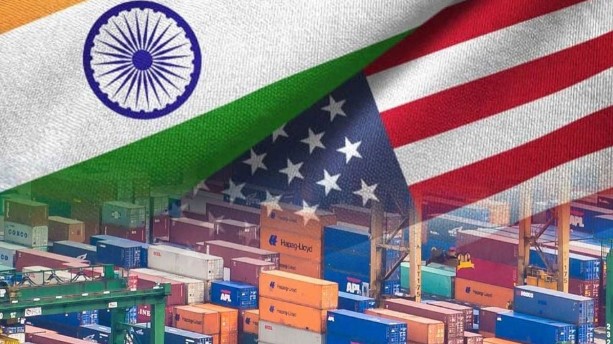
NEW DELHI — A long-awaited trade agreement between the United States and India remains unfinished despite renewed diplomatic engagement, with disagreements over tariffs, agricultural market access, energy imports and the terms of future trade continuing to complicate negotiations.
US Secretary of State Marco Rubio is scheduled to visit India from October 19 to 22, following a trip to Uzbekistan. His Indian itinerary includes Mumbai and Jamnagar rather than New Delhi, with discussions expected to focus on economic cooperation, investment and energy. The trade agreement is likely to remain a central issue during the visit.
The negotiations have become a test of how Washington and New Delhi can maintain their strategic partnership while resolving significant differences over economic policy.
Tariff uncertainty clouds the agreement
In February, the two countries announced a framework for an interim trade agreement. Under the proposed arrangement, Washington would apply an 18% reciprocal tariff to qualifying Indian goods, while India agreed to reduce or eliminate duties on a range of US industrial and agricultural products. The framework also outlined broader cooperation on market access and supply chains.
However, the agreement has not been fully finalised. A subsequent US Supreme Court ruling against the legal basis of the reciprocal tariff regime altered the circumstances in which the February framework had been negotiated.
Trade expert Ajay Srivastava argued that the ruling had weakened the value of Washington’s original offer because the proposed tariff reduction had been linked to substantial concessions from India. The two sides now need to work out terms that remain viable under the changed legal and policy environment.
Agriculture and energy remain sensitive issues
Agriculture is one of the most difficult areas of negotiation. Washington wants greater access for American agricultural products, but New Delhi is reluctant to expose domestic farmers to increased competition.
The United States is also seeking greater purchases of American energy supplies. India, meanwhile, wants its final tariff treatment to remain competitive with that of other manufacturing economies in Asia.
Another concern for New Delhi is the possibility that Washington could introduce new trade restrictions even after an agreement has been reached. Indian officials and trade analysts have questioned whether a deal would provide lasting certainty for exporters and investors.
The dispute over Russian energy purchases has added another complication. US legislation provides for the possibility of tariffs of up to 100% on countries buying Russian oil and gas. President Donald Trump signed an executive order on Friday waiving the threatened measures for the time being, but uncertainty over future action remains part of the broader trade debate.
Officials offer contrasting signals on progress
Public statements from both governments suggest that negotiations have advanced in some areas, even as important differences remain.
Indian Finance Minister Nirmala Sitharaman recently said the talks had reached a plateau, leaving little room for additional concessions. US Trade Representative Jamieson Greer has also indicated that an announcement is not imminent.
At the same time, US Ambassador to India Sergio Gor struck a more optimistic tone ahead of Rubio’s visit. Speaking at the Bloomberg New Economy Forum, Gor said negotiations were progressing rapidly and that the major issues had been addressed, while acknowledging that a complex agreement involving the world’s most populous country required further work.
India’s Commerce Minister Piyush Goyal has likewise said the interim agreement is in its final stages of legal drafting. He stressed, however, that India wants the final terms to give its exporters a competitive advantage over rivals.
What comes next?
Rubio’s meetings in Mumbai and his visit to Jamnagar, home to Reliance Industries’ major refining complex, offer opportunities to discuss commercial and energy cooperation. But a diplomatic visit alone does not guarantee that the trade pact will be signed.
For India, the priority is to secure reliable access to the US market without accepting terms that leave its exporters at a disadvantage or compromise its energy interests. Washington, meanwhile, is seeking greater access for American products and stronger economic alignment with a key Asian partner.
The two countries have indicated that they want to complete the interim agreement, but the remaining negotiations will determine whether their broad political commitment can be translated into a final, workable deal.