

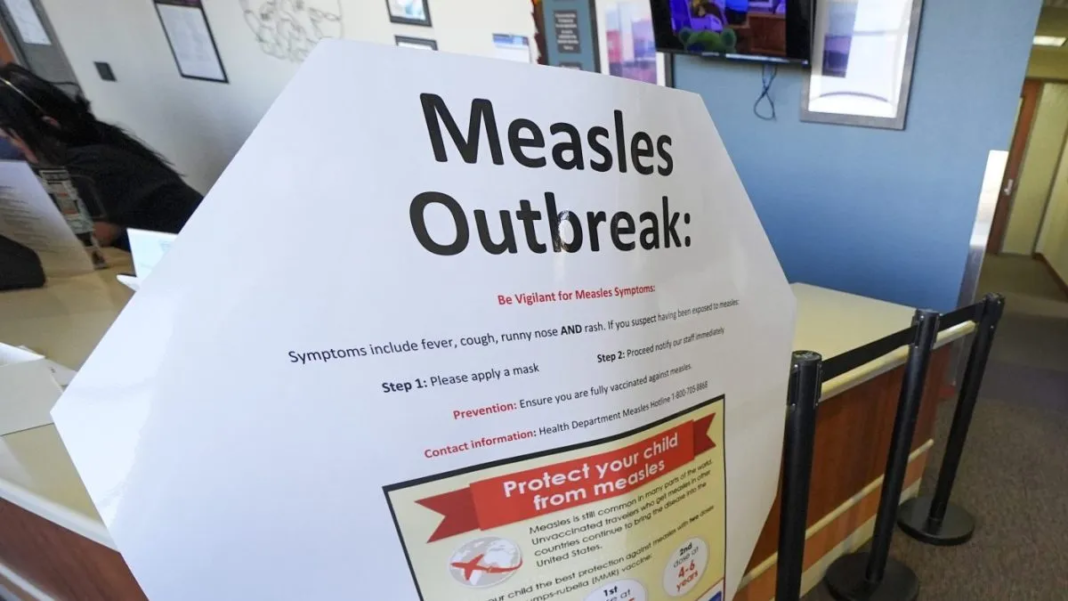
New York has declared a statewide disaster emergency as health officials work to contain a growing measles outbreak, with 108 cases reported across the state so far this year.
Gov. Kathy Hochul signed an executive order Monday declaring the emergency as officials stepped up efforts to expand vaccination, testing and other public-health measures. The state Department of Health said the cases were recorded through October 3.
Seven of the reported cases are in New York City, while 101 have been identified in communities outside the city. Since July 15, 92 cases have been reported across 18 rural counties, with officials saying the outbreak has been concentrated in communities where vaccination coverage is relatively low.
The emergency declaration is intended to give state agencies greater flexibility to respond to the outbreak and allow health-care workers to expand testing and vaccination efforts.
Hochul said people should not be suffering serious illness or dying from a disease that can be prevented through vaccination. She said the emergency measures would strengthen the state’s ability to respond quickly and make vaccines and testing more accessible.
The New York State Department of Health is urging residents to make sure they are up to date on measles, mumps and rubella (MMR) vaccinations. Health officials have described the MMR vaccine as the most effective protection against measles.
The situation is even more severe in neighboring Pennsylvania, where the outbreak has grown to 1,004 confirmed cases across 39 counties. State health officials said 198 people have been hospitalized and five measles-associated deaths have been recorded this year. The outbreak began in late April.
Pennsylvania officials have intensified vaccination efforts in affected communities. More than 53,000 MMR doses were administered across the state during September, more than twice the number typically given in a month.
Measles is one of the most contagious infectious diseases and can spread rapidly through the air when an infected person coughs or sneezes. People who are not immune can become infected after exposure.
Although many patients recover, measles can cause serious complications, including pneumonia and inflammation of the brain. It can also lead to pregnancy complications and, in severe cases, death. New York health officials continue to urge residents to remain alert to symptoms and ensure they are properly vaccinated.
The latest outbreak has renewed concerns about declining vaccination coverage in parts of the United States. Public-health authorities are emphasizing vaccination as the primary tool for preventing further transmission and protecting communities with lower levels of immunity.