

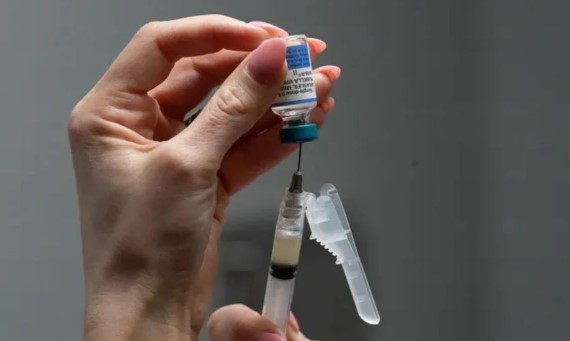
New York state has declared a disaster emergency as measles infections continue to rise across the United States, prompting authorities to expand access to testing and vaccination in an effort to contain the spread.
Gov. Kathy Hochul issued the emergency declaration Monday, October 5, after 108 measles cases were reported across the state through October 3. The order will remain in effect until November 4.
Under the emergency measures, registered nurses will be allowed to order tests for patients suspected of having measles. Pharmacists will also be permitted to administer the measles, mumps and rubella (MMR) vaccine to children as young as 2 years old.
Of the 108 cases reported in New York, seven involved residents of New York City, while the remaining 101 cases were recorded elsewhere in the state. Ninety-two of the infections were identified after July 15, with most cases concentrated in 18 rural areas where vaccination rates are relatively low.
Hochul said no one should suffer serious illness or die from a disease that can be prevented through vaccination.
The outbreak has also hit neighboring Pennsylvania particularly hard. As of Monday, the state had recorded 1,004 measles cases, with 198 patients hospitalized and five deaths reported. The outbreak is being described as the largest measles outbreak recorded in any U.S. state in more than three decades.
Other states, including Texas, Utah, Ohio and South Carolina, are also reporting measles infections.
Nationwide, the United States has recorded nearly 3,900 measles cases so far this year, making 2026 one of the country’s worst years for measles in decades.
Health experts have pointed to declining vaccination coverage as a major factor behind the resurgence. Measles is highly contagious, but widespread MMR vaccination can provide strong protection against the disease. Public-health officials generally consider a vaccination rate of about 95 percent necessary to maintain community-level protection.
The United States declared measles eliminated as a continuously circulating domestic disease in 2000. However, declining vaccination rates in recent years have allowed outbreaks to re-emerge in communities where immunity levels have fallen.
The situation is also drawing attention ahead of a meeting of the Pan American Health Organization (PAHO) scheduled for November. Officials are expected to review whether the United States and Mexico can retain their measles-elimination status amid renewed outbreaks.
The latest developments have intensified concerns among U.S. health authorities that measles, once largely contained through widespread vaccination, is again becoming a significant public-health threat.