

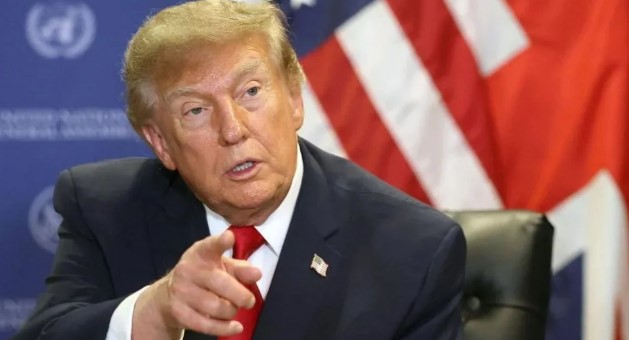
U.S. President Donald Trump has rejected an Iranian proposal for a ceasefire and the reopening of the Strait of Hormuz. But analysts say Washington may be seeking to use additional diplomatic, economic and military pressure to improve its leverage in any future negotiations with Tehran.
Trump told reporters on Saturday that he had rejected Iran’s proposal. He argued that Tehran was seeking a deal because it was under severe pressure. At the same time, Trump said he also wanted an agreement, but that Iran’s current terms were unacceptable to him.
Iranian Foreign Minister Abbas Araghchi said the government was aware of Trump’s initial reaction. However, he said Tehran had not yet received a formal response from Washington through the mediators handling communications between the two sides. Iran has said it is awaiting a definitive U.S. position through those channels.
Under Iran’s proposal, the fighting would stop for seven days, after which the Strait of Hormuz would be reopened. In return, Tehran is seeking the lifting of the U.S. naval blockade of Iranian ports, relief from restrictions on its oil exports and the release of frozen Iranian assets. The proposal also calls for a broader ceasefire across the region, including Lebanon.
Iran has said that once those conditions are met, it would reopen the strait and begin broader negotiations with Washington, including talks on its nuclear program. The proposal bears similarities to an understanding reached by the two sides in June, although that arrangement later broke down over disagreements about the terms, including the management of the strategic waterway.
Why Is Washington Taking More Time?
Some analysts believe the Trump administration may be calculating that continued economic and military pressure could eventually push Tehran to offer greater concessions.
Washington has already used sanctions, a naval blockade and other economic measures against Iran. Earlier in September, Reuters reported that the six-month conflict had already cost the United States an estimated $38 billion as of Aug. 1, according to the Congressional Budget Office, with costs projected to rise by about $3 billion a month.
Trump has also previously emphasized the impact of economic pressure on Iran. In an August interview with Axios, he said the United States was maintaining pressure while watching the effects of Iran’s worsening economic situation.
But delaying an agreement also carries risks. A prolonged conflict could keep energy prices elevated, increase pressure on U.S. forces and place additional strain on Washington’s Gulf partners. Disruptions in the Strait of Hormuz have already sharply reduced shipping traffic. Reuters reported that only 17 commodity vessels crossed the waterway over one recent weekend, compared with a prewar average of about 125 vessels a day.
Political Risks Ahead of the Midterm Elections
The timing also carries a domestic political dimension for the Trump administration, with U.S. midterm elections scheduled for November.
A Reuters/Ipsos poll published in August found that 31% of Americans supported U.S. military action against Iran, down from 37% in March. The survey also found that 83% expected the conflict to continue for some time.
Rising fuel and transportation costs could add another layer of domestic pressure if the conflict continues. The Strait of Hormuz is a critical route for global oil and gas shipments, and disruptions there have already affected energy markets. Reuters reported earlier in September that Iran’s efforts to restrict shipping through the waterway had contributed to significant uncertainty in global energy markets.
At the same time, Trump has indicated that he remains interested in reaching an agreement. On Sunday, he said he expected talks with Iran to resume during the coming week, while maintaining that Tehran’s current proposal was not acceptable to him.
Pressure Could Also Produce the Opposite Result
Analysts caution that greater economic pressure does not necessarily guarantee that Tehran will make additional concessions.
A prolonged stalemate could encourage Iran to use the Strait of Hormuz and other regional pressure points as bargaining tools. The conflict could also affect shipping through the Bab el-Mandeb Strait, another important route for global trade, particularly given the activities of Iran-backed Houthi forces in the Red Sea region. Reuters has reported disruptions and security concerns around both waterways.
The longer the confrontation continues, the greater the potential pressure on Gulf states such as Qatar, Saudi Arabia and the United Arab Emirates, as well as on the wider global energy market.
Tehran Is Also Calculating the Value of Time
Iran, meanwhile, appears to be treating time as a negotiating tool of its own.
Araghchi has said Tehran’s conditions for reopening the Strait of Hormuz remain unchanged and that any move toward reopening the waterway would depend on those conditions being met. He also emphasized that Iran believes a negotiated settlement is the way out of the current deadlock.
Reuters reported earlier that Iranian officials had presented their proposal through mediators and viewed the United Nations General Assembly as an opportunity to revive diplomacy. Tehran’s proposal called for reopening the strait within a week if Washington eased military pressure and lifted its blockade of Iranian ports.
The two sides therefore appear to be approaching the negotiations from different positions. Washington has signaled that it wants more favorable terms, while Tehran says the reopening of the strait is conditional on its demands being met.
For now, neither side appears ready to accept the other’s terms immediately. Trump has rejected Iran’s current proposal, but he has also said he wants a deal and expects talks to resume. Iran, meanwhile, says it remains open to negotiations but is not prepared to abandon the conditions it has set for reopening the Strait of Hormuz.