

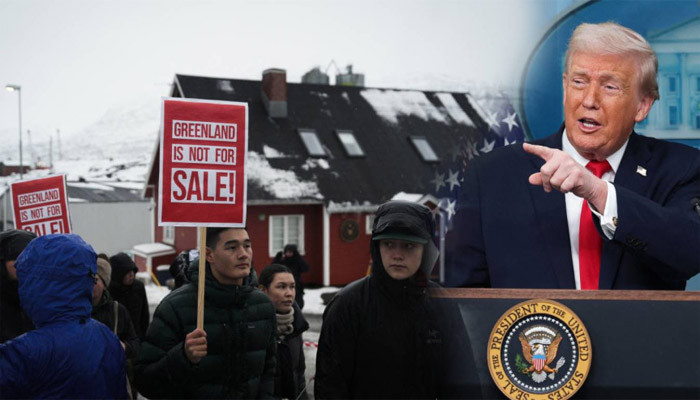
The United States, Denmark and Greenland have reached an agreement aimed at strengthening security in Greenland and expanding the U.S. military presence on the strategically important Arctic island. U.S. President Donald Trump has described the agreement as giving Washington **“permanent control” over Greenland’s security and other security-related needs**.
Trump announced the agreement on Friday, September 18, in a post on his social media platform, Truth Social. The agreement is expected to be formally signed next week in New York on the sidelines of the United Nations General Assembly. However, the pact will still require the necessary parliamentary procedures in Denmark and Greenland before it can take effect.
Trump described the agreement as having no expiration date. He said the United States would have the ability to take whatever measures it considers necessary to defend Greenland and U.S. security interests there. He also said that U.S. adversaries would not be allowed to establish military bases, station troops or make sensitive investments in Greenland without Washington’s written approval.
Trump further said the United States would immediately begin planning for a significantly expanded military presence in Greenland. The United States already maintains a military facility at **Pituffik Space Base** in northern Greenland under a longstanding defense arrangement with Denmark.
Since returning to the White House for a second term in 2025, Trump has repeatedly argued that Greenland is strategically important to U.S. national security and has pushed for greater American control over the territory. His earlier calls to acquire Greenland created significant tensions with NATO ally Denmark.
The latest agreement, however, does **not transfer sovereignty over Greenland to the United States**. Danish Prime Minister Mette Frederiksen said the agreement recognizes the sovereignty and territorial integrity of the Kingdom of Denmark as well as the Greenlandic people’s right to self-determination.
Greenlandic Prime Minister **Jens-Frederik Nielsen** also welcomed the agreement, saying it strengthens the security of Greenland, the Kingdom of Denmark, the United States and the broader Western alliance. Frederiksen similarly said the agreement would strengthen security in the Arctic and North Atlantic regions and would be positive for NATO and Europe.
## U.S. Military Presence Could Expand
Reports indicate that Washington intends to significantly expand its military footprint in Greenland. The United States already has a military presence on the island, and the new agreement would provide a framework for additional U.S. military infrastructure.
The deal is also intended to prevent non-NATO adversaries from establishing military bases or maintaining a military presence in Greenland. Reports indicate that it would also place restrictions on sensitive investments by countries viewed as strategic competitors of the United States.
The United States has maintained military facilities in Greenland for decades. A 1951 defense agreement between Washington and Copenhagen provides the legal framework for the American military presence on the island and gives the United States broad rights concerning its bases there.
The new agreement is being presented by the Trump administration as a way to address U.S. security concerns involving the Arctic, particularly the potential expansion of Russian and Chinese military and economic influence in the region.
U.S. Secretary of State **Marco Rubio** said the agreement would permanently address American national-security concerns regarding Greenland and ensure that the territory remains within the strategic defense area of North America.
## Sovereignty Remains With Denmark and Greenland
Despite Trump’s description of the agreement as providing “permanent control,” Danish and Greenlandic officials have emphasized that the pact does not amount to a transfer of sovereignty.
Greenland is an autonomous territory within the **Kingdom of Denmark**, with extensive self-government but with Copenhagen retaining responsibility for areas including foreign policy and defense. The agreement is intended to strengthen security cooperation while maintaining the existing constitutional framework and Greenlanders’ right to self-determination.
The precise terms of the agreement have not yet been fully published. The Danish and Greenlandic governments have said the agreement must first be formally signed and then go through the required parliamentary procedures before entering into force.
The agreement therefore represents a significant development in U.S.-Danish and Arctic security relations, but its final legal scope will depend on the text ultimately signed and the subsequent approval process.
For Washington, the agreement would provide a framework for a larger and more permanent U.S. security role in Greenland. For Denmark and Greenland, officials have characterized it as a security arrangement that preserves Danish sovereignty and Greenland’s right to self-determination.
The formal signing expected during next week’s U.N. General Assembly in New York will be the next major step in determining how the agreement will reshape the U.S. military and strategic presence in Greenland.