

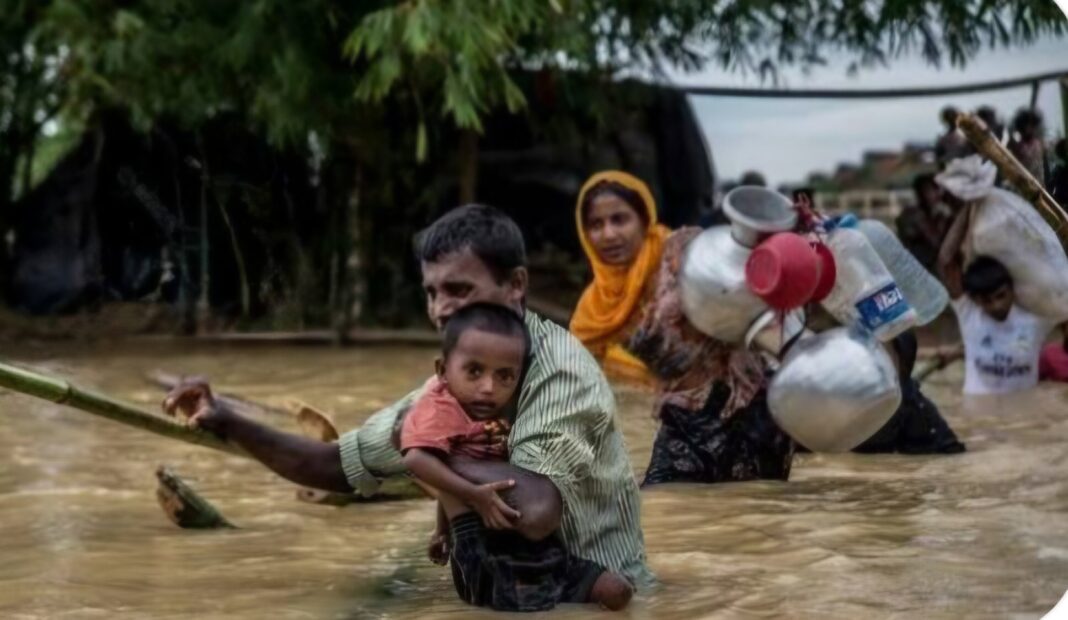
When a country bears the burden of hosting nearly 1.2 million refugees for nine years, that burden should not remain merely a burden. It should, in principle, also be transformed into a form of diplomatic capital. In the ruthless arithmetic of international politics, humanitarianism is often a convertible currency. When a state absorbs the first shock of a crisis, the pressure of the global conscience works in its favor—at least for a certain period. Skilled statesmen use that window to secure economic packages, diplomatic recognition, security cooperation, and stronger international standing.
The humanitarian response Bangladesh demonstrated in 2017 was extraordinary. Yet it would be difficult to argue that, nine years later, Bangladesh has fully utilized the opportunity to transform that humanitarian contribution into diplomatic and economic capital.
Not receiving the Nobel Peace Prize should never have been a matter of grievance for a state. The real failure was Bangladesh’s inability to effectively present and leverage its role before the world. When Angela Merkel opened Germany’s doors to roughly one million Syrian refugees in 2015, despite considerable domestic criticism, she succeeded in establishing that decision as part of Germany’s moral leadership narrative on the global stage. Bangladesh could have built a similar narrative: a poor and densely populated country that, despite its limited resources, stood beside some of the world’s most vulnerable people. Such an identity could have been invoked at virtually every diplomatic table. Yet Bangladesh’s state machinery failed to consistently construct and sustain that narrative. Its diplomacy remained reactive rather than proactive.
The contrast becomes even sharper when one looks at Turkey under Recep Tayyip Erdoğan. Turkey has hosted millions of Syrian refugees and has become one of the world’s largest refugee-hosting countries. But Erdoğan’s government did not treat the refugee crisis merely as a humanitarian obligation. It turned the issue into a strategic instrument. Under the 2016 agreement with the European Union, Turkey committed to helping stem the flow of refugees toward Europe. In return, the EU pledged €6 billion in financial assistance and offered a range of political and economic incentives, including progress on visa liberalization, modernization of the customs union, and renewed momentum in accession discussions. Not all of these commitments were fully implemented, particularly visa-free travel, but Erdoğan repeatedly used the refugee issue to exert pressure on Europe and demand additional support. From threats to open the borders in 2020 to repeated demands for greater financial assistance, Ankara demonstrated how a humanitarian crisis could be incorporated into a broader geopolitical strategy.
At the same time, Erdoğan publicly described Syrians as “guests” and “brothers,” helping construct a positive national narrative, even as anti-refugee sentiment also grew inside Turkey. In other words, Turkey attempted to manage domestic politics while simultaneously establishing itself internationally as an indispensable geopolitical partner—particularly in Europe’s migration-management system.
Bangladesh has lacked anything comparable in terms of strategic consistency. At the beginning of the Rohingya crisis, international sympathy was at its peak. The UN secretary-general, heads of government, international organizations, and human rights groups visited Cox’s Bazar and praised Bangladesh’s response. Yet Bangladesh never developed a comprehensive strategy to convert that international sympathy into long-term diplomatic or economic gains. The result was predictable. Humanitarian funding has declined over the years, while the gap between needs and available resources has continued to widen. Bangladesh has repeatedly returned to international conferences with essentially the same appeals for assistance. It resembles a businessman who approaches the same customer every year asking for help, but never learns how to establish the value of what he is offering.
The failure is even more evident in Bangladesh’s relations with the Western world. The United States, the European Union, and their allies have repeatedly praised Bangladesh’s role in hosting the Rohingya. But Bangladesh has struggled to translate that goodwill into concrete trade preferences, investment arrangements, or strategic partnerships. The possibility of using the Rohingya issue as part of a broader negotiating strategy over market access, trade preferences, development assistance, investment, and other forms of cooperation has never been pursued with sufficient consistency.
The same pattern is visible in relations with the Muslim world. Bangladesh has repeatedly sought assistance from Saudi Arabia, Turkey, Qatar, the United Arab Emirates, and other Muslim-majority countries. More recently, the government has engaged OIC member-state ambassadors to seek greater cooperation. Yet such appeals have rarely evolved into specific investment projects, technology-transfer agreements, or long-term economic partnerships tied to the Rohingya crisis.
The Organization of Islamic Cooperation, through The Gambia, has supported the legal case against Myanmar at the International Court of Justice over alleged violations of the Genocide Convention. That legal process, however, is necessarily lengthy and has yet to produce a practical solution to the daily suffering of the refugees. Bangladesh could have done more to use the legal and diplomatic momentum surrounding the case to strengthen its broader international position.
The fundamental question is therefore whether the problem has been a lack of sincerity or a lack of strategic capacity. Perhaps it has been a combination of both.
For much of the past decade and a half, Bangladesh’s foreign policy has often appeared reactive rather than strategic. Instead of being guided by long-term planning, it has frequently been dominated by immediate crisis management. Responsibility for the Rohingya issue has been distributed across different ministries and agencies, while the absence of a centralized and sustained diplomatic strategy has remained evident. Political priorities have also often pushed the Rohingya issue into the background. As a result, a crisis that could once have given Bangladesh a stronger moral and strategic position internationally has gradually become a burden that the country continues to carry while searching for a solution.
The comparison between Erdoğan’s Turkey and Bangladesh after the Hasina era is particularly revealing. Turkey turned the refugee crisis into an instrument for strengthening its geopolitical position. Bangladesh, by contrast, largely continued to carry the crisis as a humanitarian responsibility without extracting commensurate diplomatic or economic benefits.
That does not mean Bangladesh should abandon the legitimate pursuit of safe, voluntary, dignified, and sustainable repatriation to Myanmar. On the contrary, establishing stability in Rakhine State and creating the conditions for safe return must remain the central objective.
But alongside that effort, Bangladesh must learn to use its diplomatic capital more strategically. It should seek concrete trade and investment benefits from Western partners, develop long-term economic partnerships with Muslim-majority countries, strengthen security and regional cooperation, and establish its humanitarian role as a recognizable part of Bangladesh’s international brand.
The failure cannot be attributed to any single government alone. It reflects a longer-standing state approach in which crises have been viewed primarily as problems to be managed rather than opportunities to be strategically leveraged.
A country that does not learn how to turn a crisis into an opportunity risks being trapped in the same crisis again and again—always as the victim, and rarely as the strategic player.