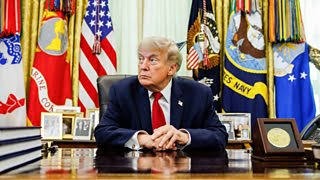

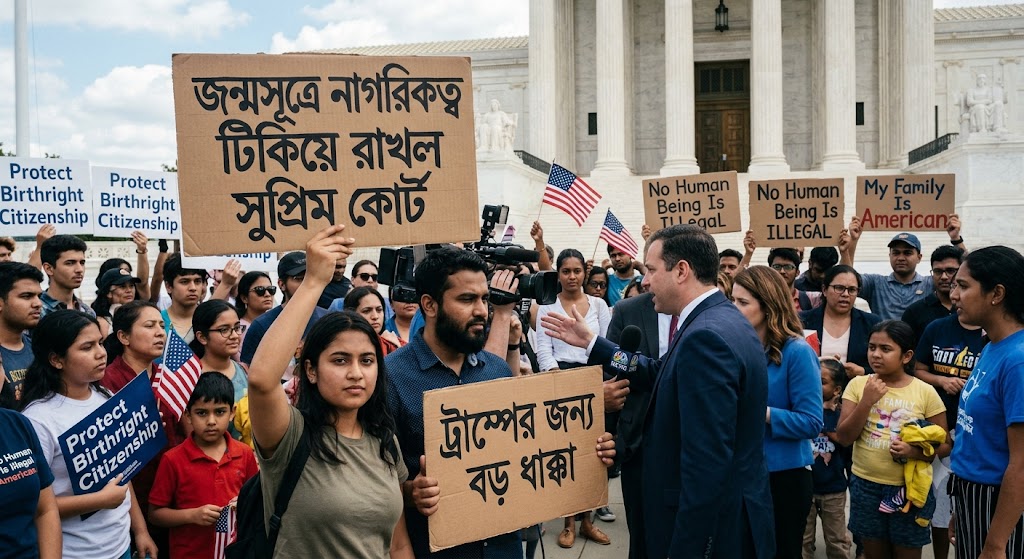
The U.S. Constitution guarantees birthright citizenship to virtually every child born on American soil. On Tuesday, June 30, the U.S. Supreme Court reaffirmed that principle in a landmark 6–3 decision, delivering a decisive setback to President Donald Trump. Chief Justice John Roberts authored the majority opinion.
The ruling strikes down an executive order Trump signed on the first day of his second term that sought to deny U.S. citizenship to children born in the United States to parents who entered the country unlawfully or were living on temporary visas.
That executive order never took effect. Every lower federal court that reviewed it concluded it was plainly unconstitutional and blocked its enforcement.
For years, Trump has argued that the Constitution does not guarantee automatic citizenship to everyone born in the United States. The Supreme Court firmly rejected that interpretation.
Writing for the majority, Chief Justice Roberts explained that the framers of the Fourteenth Amendment, adopted after the Civil War, intentionally crafted a broad definition of citizenship and rejected proposals that would have restricted it.
The amendment states unequivocally:
“All persons born or naturalized in the United States, and subject to the jurisdiction thereof, are citizens of the United States.”
Trump had argued that the amendment was intended solely to secure citizenship for formerly enslaved people—not, in his words, “for people from all over the world to come to the United States and settle.”
The Court noted that this interpretation has never been accepted by American courts or constitutional practice during the past 160 years.
Chief Justice Roberts pointed to the landmark 1898 case *United States v. Wong Kim Ark*, which established the modern constitutional understanding of birthright citizenship.
Wong Kim Ark was born in San Francisco in 1873 to Chinese immigrant parents. After visiting relatives in China, he was denied reentry into the United States because officials claimed he was not an American citizen. He challenged the decision, and the Supreme Court ruled in his favour, establishing that children born in the United States are citizens regardless of their parents’ nationality or immigration status. At the time, immigrants were not required to carry passports or visas to enter the country.
In Tuesday’s decision, the Court clarified that the constitutional phrase “subject to the jurisdiction” includes nearly every child born on U.S. soil, with only a few narrow exceptions. Today, the principal remaining exception applies to children born to accredited foreign diplomats, who are not subject to U.S. jurisdiction in the constitutional sense.
The Wong Kim Ark precedent became so deeply embedded in American constitutional law that birthright citizenship survived even during periods of intense anti-immigrant sentiment.
During World War II, for example, when Japanese Americans were forcibly interned in detention camps, children born on U.S. soil continued to receive American citizenship automatically. Congress later codified this longstanding constitutional understanding in federal law.
During oral arguments in April, the American Civil Liberties Union’s Cecilia Wang—herself a birthright citizen born to Chinese immigrant parents—urged the Court to preserve the original purpose of the Fourteenth Amendment.
She argued that the amendment’s framers deliberately chose to confer citizenship on children rather than on their parents because, in America, children are not punished for the actions or legal status of their parents.
“In America,” Wang argued, “we do not punish children for the sins of their fathers. We wipe the slate clean and begin anew. If you are born here, you are American, and everyone stands equal under the Constitution.” Justices Clarence Thomas, Neil Gorsuch, and Samuel Alito dissented.
The birthright citizenship ruling marks yet another defeat for Trump during the Supreme Court’s closing days of its current term. Although the Court recently expanded presidential authority over independent regulatory agencies, Trump has now lost several major cases involving the Federal Reserve, mail-in voting, and, most significantly, birthright
citizenship.
This ruling carries particularly profound consequences because it affects the future of millions of immigrant families. For immigrant communities—including Bangladeshi Americans and countless other families whose children have been or will be born in the United States—the decision provides reassurance that one of the nation’s oldest
constitutional guarantees remains firmly intact.
Under Chief Justice Roberts’ leadership, the Court’s six-justice majority reaffirmed that the Fourteenth Amendment’s central promise—equal citizenship under the Constitution, forged in the aftermath of the Civil War—remains an enduring pillar of American law,beyond the reach of presidential preference or political change.