

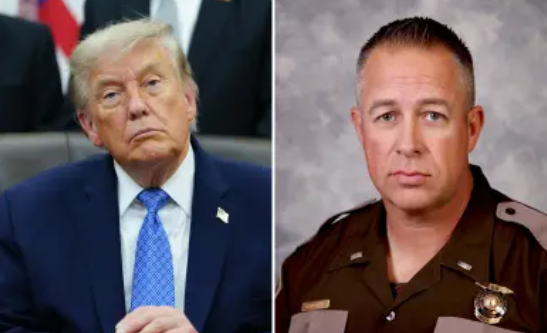
A single appointment at the White House can have a profound impact on the lives of hundreds of thousands of people. On Saturday, June 27, President Donald Trump made one such decision, announcing that retired Oklahoma State Trooper Lance Schryver will serve as the next Director of U.S. Immigration and Customs Enforcement (ICE).
In a post on Truth Social, Trump praised Schryver’s nearly three decades of law enforcement experience, describing him as “a true patriot.” He also noted that Schryver had won election in every county of Oklahoma for three consecutive terms.
For millions of immigrants across the United States, however, this appointment carries significance far beyond a routine personnel change. ICE is not just another federal agency. For many immigrant families, it is the agency most closely associated with workplace raids, home arrests, detention, and deportation.
The agency has operated without a Senate-confirmed permanent director since 2017. Deep political divisions over immigration policy and continuing controversy surrounding ICE have prevented successive nominees from securing confirmation, leaving the agency under a series of acting directors.
Schryver’s nomination comes at a time when the Trump administration has adopted its toughest immigration enforcement agenda yet, emphasizing stricter border security and more aggressive action against undocumented immigrants.
Perhaps the most notable aspect of Schryver’s background is his extensive involvement with the 287(g) program, which authorizes local police departments and county sheriff’s offices to work directly with ICE in enforcing federal immigration laws. The program effectively extends immigration enforcement beyond federal agents by incorporating
local law enforcement agencies into the process.
Trump highlighted this experience as one of Schryver’s greatest qualifications, saying he has removed “the most dangerous criminal illegal aliens from our streets.”
Still, questions remain. Schryver is not a nationally recognized figure, and relatively little public information is available about his leadership experience on major immigration or national security issues. As a result, some observers are questioning whether he is prepared to lead one of the federal government’s most scrutinized law enforcement
agencies.
The nomination also signals a broader strategic shift. The administration appears increasingly committed to strengthening partnerships between federal immigration authorities and local law enforcement agencies, making immigration enforcement more decentralized and expansive.
Attention now turns to the U.S. Senate. Lawmakers are expected to return to Washington after the Independence Day recess, where Republicans are likely to push for swift confirmation. Democrats, meanwhile, are expected to raise concerns about ICE’s expanding authority, accountability, and civil rights implications, making the confirmation
process far from certain.
Even before the Senate votes, however, the administration’s message is unmistakable. President Trump is showing little interest in moderating his immigration agenda. Instead, he has nominated a career law enforcement officer whose professional background has been defined by strict enforcement and close cooperation with immigration authorities.
The impact of this appointment will extend well beyond Washington. It will be closely watched by immigrant communities in New York, California, Texas, Florida, and across the country. For many immigrant families—including thousands of Bangladeshi Americans—the nomination signals a period of heightened uncertainty and increased vigilance as
the administration moves forward with its immigration agenda.