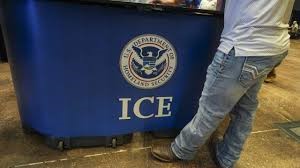

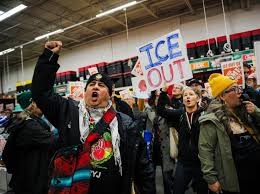
A major piece of good news arrived from California Tuesday night for immigrant communities across the United States. Federal Judge P. Casey Pitts issued a nationwide injunction against a Trump administration policy that allowed immigrants to be arrested inside and around immigration courthouses. The ruling carries significant implications for
millions of immigrants nationwide, including Bangladeshi and other South Asian communities living in New York, California, Texas, and beyond.
In a 71-page decision, Judge Pitts of the U.S. District Court for the Northern District of California concluded that the administration’s policies were arbitrary, lacked a rational basis, and violated federal administrative law. According to the ruling, attorneys representing ICE and the agencies responsible for immigration courts failed to provide a
reasonable justification for the policy.
To understand the significance of the decision, it is important to understand how the policy worked. Under the Trump administration’s directive, ICE agents could arrest immigrants immediately after they appeared before an immigration judge. Imagine showing up to court to comply with a legal obligation, only to be handcuffed as you leave the courtroom. Critics argued that the practice discouraged thousands of immigrants from attending their hearings, undermining the very legal process the government claimed to uphold.
Judge Pitts directly challenged the logic behind the policy. He noted that ICE was targeting individuals who were appearing in court precisely because of the immigration matters for which they were being prosecuted. In his view, the policy was fundamentally self-contradictory and rested on what he described as a “false premise.”
The ruling also addressed another controversial issue: detention practices. Beyond courthouse arrests, Judge Pitts struck down a policy that removed the previous 12-hour limit on holding immigration detainees. According to reports by CBS News, some immigrants at a San Francisco processing facility were detained overnight and, in some
cases, for multiple days. The judge found that such practices violated detainees’ due process rights under the Fifth Amendment.
The Trump administration reacted swiftly and critically. James Percival, General Counsel for the Department of Homeland Security, argued on social media that when a judge orders a defendant into custody, detention naturally follows. He maintained that immigrants ordered
removed by immigration judges should be treated similarly and characterized the ruling as an example of judicial activism.
Immigrant advocates, however, saw the decision very differently.
“Courthouses should be places of justice, not hunting grounds for ICE,” one advocate said. “From San Francisco to Miami, from Chicago to New York, no immigrant should be forced to choose between appearing in court and preserving their freedom.”
The ruling’s impact extends far beyond California. Because the injunction is nationwide, it applies across the United States. New York had already seen a separate judicial intervention. Federal Judge Kevin Castel in Manhattan previously ruled that immigration courthouse arrests are generally unjustified unless an individual poses a threat to
national security or public safety, presents an imminent risk of violence, or is likely to destroy evidence.
For New York’s Bangladeshi-American community, particularly those living in neighborhoods from Jackson Heights to Brooklyn, the decision carries special relevance. Many families know someone navigating the complex immigration system. Fear of being detained while attending a required court hearing had become a powerful deterrent, causing some immigrants to avoid legal proceedings altogether. This ruling may help restore
confidence in the process.
The legal battle is far from over. The Trump administration is widely expected to appeal the decision to higher courts. Yet for now, the ruling sends a powerful message: despite intense political battles over immigration, America’s judicial system has not entirely surrendered its role as a safeguard of due process and the rule of law.
For immigrant communities across the country, that message alone provides a measure of reassurance.