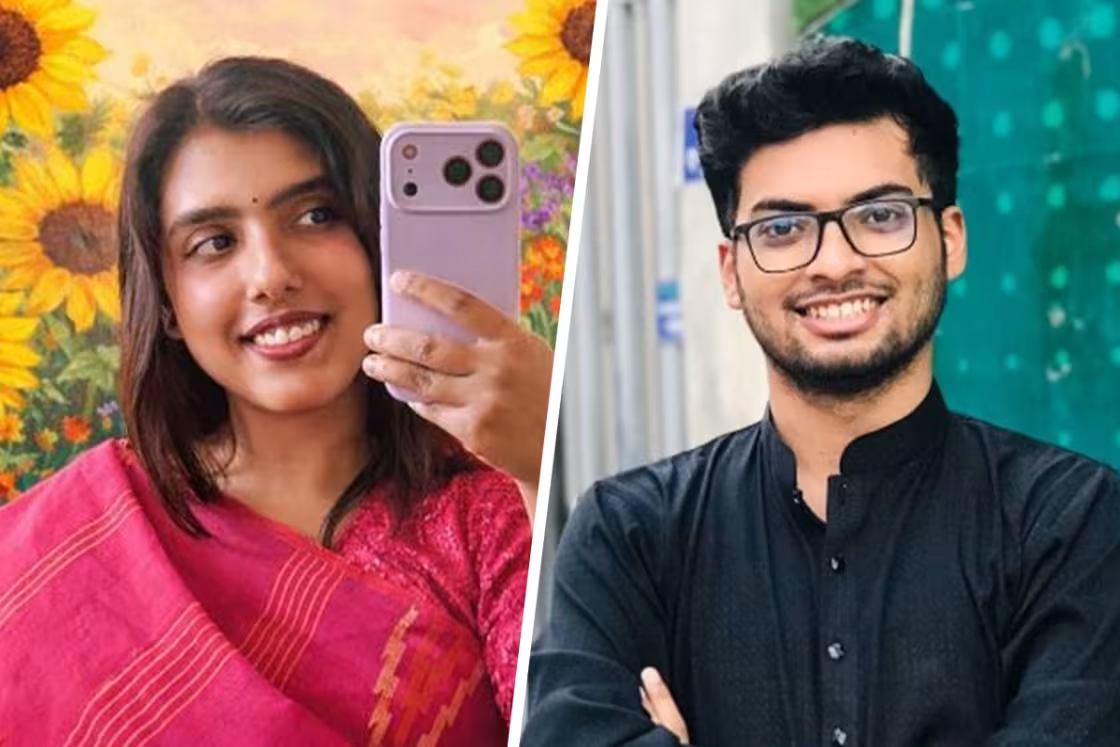


A Bangladeshi student who once arrived in the United States with dreams of building a future has returned home empty-handed after months in immigration detention. Joytu Chowdhury, a 24-year-old student in Illinois, voluntarily returned to Bangladesh on February 26, 2026, after spending months in detention. Reflecting on his experience, he said, “I was completely broken.”
Joytu’s journey in the United States began in December 2021, when he arrived on an F-1 student visa to study at Illinois Wesleyan University. He pursued a major in finance with a minor in computer science. However, in August 2025, his visa status was revoked. Authorities cited his transfer between universities, along with a prior case involving driving
under the influence (DUI) and a retail theft charge. U.S. Immigration and Customs Enforcement arrested him on December 3, 2025.
Following his arrest, Joytu was transferred between multiple detention centers. He described the conditions as extremely harsh and inhumane, alleging inadequate healthcare and a lack of mental health support. Initially, he remained determined to fight his case and stay in the United States with his American citizen wife. But after months in detention, the emotional and psychological pressure took a toll.
Eventually, he felt he had no choice but to leave. On February 26, 2026, he voluntarily returned to Bangladesh.
The Department of Homeland Security rejected Joytu’s allegations. Officials stated that ICE detention centers provide extensive medical care and maintain required standards. They also disputed his claim that he paid for his own return, saying that ICE purchased his ticket and that no passport was required, meaning he incurred no personal cost. These statements highlight a clear contradiction between the government’s account and Joytu’s version of events.
Back in Bangladesh, Joytu now faces an uncertain future. His American wife remains in the United States, and their marriage is now separated by distance and immigration barriers. The dreams that brought him across the Atlantic in 2021 have, for now, faded into memory.
His case has also added fuel to a broader debate over immigration enforcement in the United States under Donald Trump. Critics say enforcement measures have become increasingly strict, with a growing number of controversial detentions. One such case includes the detention of Minu Batra, which drew political criticism. Human rights advocates
argue that cases like Joytu’s suggest detention conditions may pressure individuals into voluntary departure, raising serious concerns from a human rights perspective.
The news has sparked widespread reaction within the Bangladeshi community in the United States. Thousands of Bangladeshi students and immigrants live, study, and work across the country. Many now fear that issues such as visa complications, past legal cases, or even changing universities could increase the risk of detention. For many, Joytu’s
story serves as a warning.