
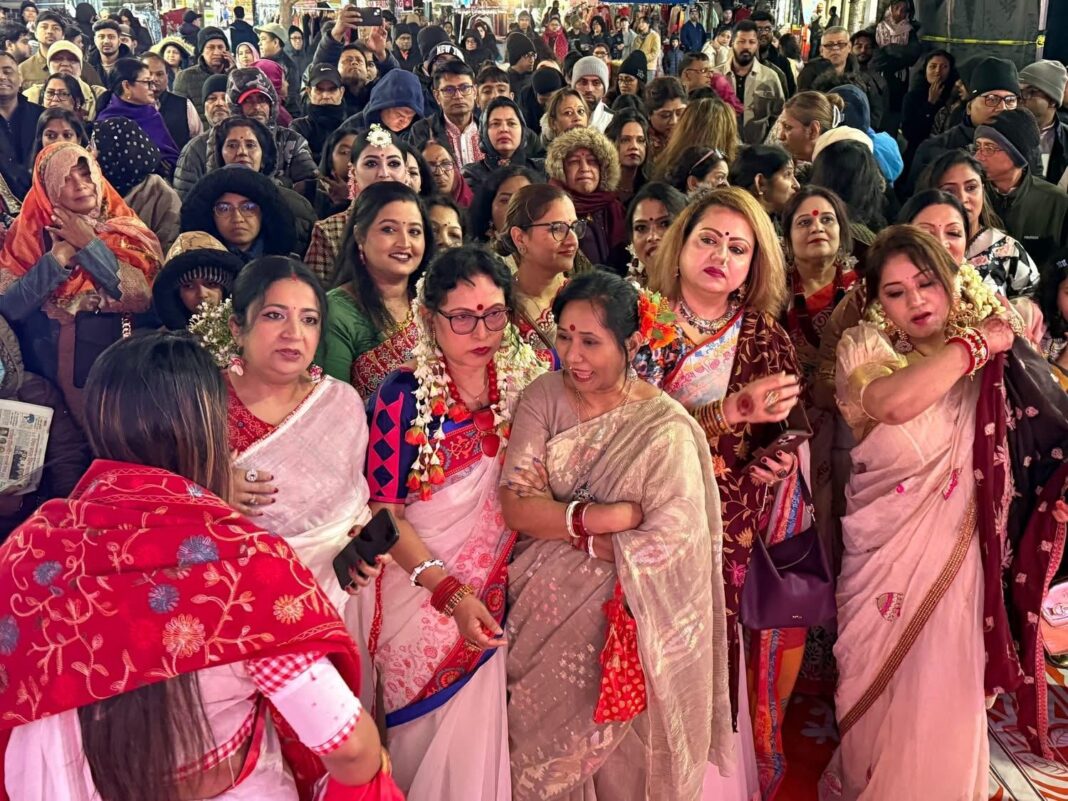
Bengali New Year 1433 celebrations in New York have now clearly evolved into an important public event in the city’s mainstream political calendar. From the massive gathering in Times Square on the first day, to the unveiling of a commemorative book in Queens, and the upcoming closing ceremony on April 22 at the Albany State Capitol, one of the most significant aspects of this year’s celebration has been the active participation of mainstream New York politicians.
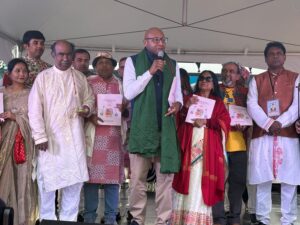
Against the backdrop of the upcoming election season, elected officials from the city and state levels, prospective candidates, community-connected policy advisors, and political staffers attended various Pohela Boishakh events. Organizers say that the growing influence of Bangladeshi-American voters, their demographic strength in Queens and Jackson Heights, and their organizational capacity have together turned Bengali New Year into an important platform in New York’s electoral politics.
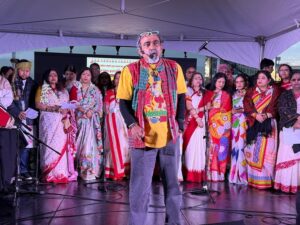
On April 12, during the Queens segment of the celebration, Queens Borough President Donovan Richards Jr. attended as the chief guest. Alongside him were several mainstream political figures, campaign organizers, community liaisons, and individuals considered potential future candidates. Many of them exchanged greetings with members of the Bangladeshi community and described the celebration as a symbol of New York’s multicultural strength.
In his remarks, Donovan Richards described Queens as a living example of “Little Bangladesh.” He said, “The Bangladeshi community is progressing rapidly, not only culturally but also politically. Just as I came into leadership with the trust of the people, I believe very soon Bangladeshi young people will also rise to major elected positions in New York City.”
His remarks generated strong enthusiasm among young members of the diaspora. Many viewed his statement as a clear expression of mainstream confidence in the future of Bangladeshi-American civic leadership.
Convener Rokeya Haider said that the participation of mainstream political leaders in the New Year celebration demonstrates that the Bangladeshi community has become an important force in the social and political reality of the city. She thanked the borough president and all elected representatives present, noting that their continued engagement is vital for future civic initiatives, language and cultural programs, and education-based activities within the diaspora community.
NRB Worldwide founding president Bishwajit Saha stated that following the large gathering at Times Square on the first day, the political presence in Queens sends a strong message: Bengali New Year is no longer limited to a cultural celebration, but has become part of New York City’s civic and electoral discourse.
One of the key highlights of the event was the unveiling of a 248-page commemorative volume documenting diaspora Bengali history, literature, cultural memory, and the legacy of future generations. Guests described the book as a “cultural document of global Bengal.”
During the book unveiling ceremony, attendees included Convener Rokeya Haider, music director Mohitosh Talukder Taposh, General Secretary Tofozzal Hossain (Liton), Administrator Soumya Dasgupta, organizers Nirupoma Saha, Tapas Saha, Shashadhar Howladar, Gopa Pal Mukta, Nurul Baten, Gitali Howladar, and other prominent members of the diaspora community.
The Borough President was presented with an ektara, a traditional symbol of Bengali culture, by General Secretary Tofozzal Hossain (Liton). He was also honored with a Bangladesh flag-themed ceremonial stole by founding president Bishwajit Saha.
Organizers further announced that the third and final phase of the Bengali New Year celebration will be held on April 22 at the New York State Capitol, where more senior policymakers and legislators are expected to attend. As a result, this three-part celebration is being seen as a gradual transformation of the Bangladeshi diaspora’s cultural recognition into political empowerment.