
The Nobel Peace Prize carries an inherent sense of nobility. In a world torn apart by war, it honours those who stand for peace, uphold the rule of law against the arrogance of power, and remain committed to protecting the rights of the oppressed. Yet a look at the history of the Nobel Peace Prize reveals that recognition in the name of peace has not always helped secure peace itself. At times, the award has gone to individuals whose subsequent actions have called its moral foundations into question. At other times, the absence of certain names from the list of laureates has become one of history’s great regrets.
Consider President Donald Trump. His interest in winning the Nobel Peace Prize is hardly a secret. He has claimed credit for ending conflicts, highlighted his diplomatic achievements, and questioned why others received the honour instead of him. The prize has not come his way. Yet Trump remains a recurring presence in discussions about the Nobel Peace Prize, making him a prominent participant in its controversies despite never having received it.
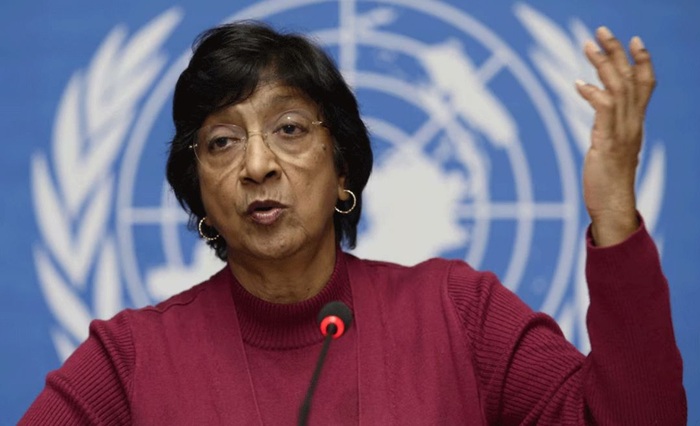
The announcement of the 2026 Nobel Peace Prize has brought these long-standing debates back into focus. This year’s laureate is South African jurist and former United Nations High Commissioner for Human Rights Navi Pillay. She has been honoured for her long career advancing international law and peace. According to the Norwegian Nobel Committee’s official announcement, her role in promoting accountability for war crimes, crimes against humanity and genocide was among the principal reasons for the selection. Following the announcement, an old question has resurfaced: Is the Nobel Peace Prize merely recognition of past achievements, or does it also convey a message about the political and moral choices facing the world today?
Born in Durban, South Africa, in 1941 to a family of Indian Tamil descent, Navi Pillay grew up in a society marked by racial discrimination. Her legal career has been closely associated with the struggle against inequality and efforts to strengthen international justice. She served as a judge and later as president of the International Criminal Tribunal for Rwanda. From 2008 to 2014, she served as the United Nations High Commissioner for Human Rights.
Her contribution to establishing sexual violence as a central issue in the prosecution of crimes committed during the Rwandan genocide is particularly noteworthy. A defining principle of her career has been that no state, however powerful, should be allowed to evade accountability when serious allegations of wrongdoing arise. This position has earned her considerable respect, but it has also placed her at the centre of political opposition.
Her stance on Israel’s military campaign in Gaza and her association with the work of a United Nations commission of inquiry have brought her into the centre of international controversy. In 2025, a UN commission of inquiry characterised Israel’s actions in Gaza as genocide. Israel rejected the allegation, while critics, including those in the United States, questioned the commission’s impartiality.
One distinction is essential here. The findings of an investigative commission, a state’s response to those findings and a judicial ruling by an international court are not the same thing. Treating them as interchangeable undermines journalistic accuracy. Similarly, disagreement with a report does not, by itself, establish that the report was politically motivated.
By awarding Pillay the Nobel Peace Prize, the committee has signalled its support for international law. Supporters will argue that her commitment to human rights during wartime and her efforts to hold powerful actors accountable make her a deserving recipient. Critics, however, may contend that such a decision also sends a political message that could strengthen one side of an international dispute.
This is where the Nobel Peace Prize encounters its central dilemma. The award is presented to an individual, but its implications extend to states, governments, wars and international relations. In 2025, the Nobel Peace Prize went to Venezuelan opposition leader María Corina Machado. The committee recognised her political struggle against authoritarianism and her efforts to promote democracy.
What followed was a dramatic episode. During a meeting with Trump at the White House in January 2026, Machado presented her Nobel medal to the American president. Trump publicised the gesture. It was an extraordinary moment: the medal of a genuine laureate had reached the hands of a man who had long expressed his desire to win the prize himself.
But the Nobel Prize is not a trophy whose identity changes hands when it is given away. The Nobel Peace Center has made clear that while ownership of the physical medal can change, the identity of the laureate cannot be transferred. Even though Machado gave her medal to Trump, history will continue to record her as the 2025 Nobel Peace Prize winner. The gesture involved politics, diplomatic calculations and questions of personal recognition. Nevertheless, Machado’s name will remain in the historical record as the recipient of the 2025 award.
Trump’s presence in debates about the Nobel Peace Prize is nothing new. He has repeatedly argued that his diplomatic initiatives deserve recognition, while questioning the decision to award the prize to Barack Obama in 2009.
In 2019, during a meeting with Pakistan’s then-prime minister Imran Khan at the United Nations, Trump expressed his dissatisfaction with the Nobel Peace Prize. His argument, in essence, was that he could have received awards for many achievements if his work had been judged fairly. His mockery of Obama has also become a familiar part of the debate.
Obama received the Nobel Peace Prize less than a year after becoming president of the United States. At the time of the announcement, his administration had a relatively limited record of accomplishments. This raised an important question: Was the award recognising concrete achievements, or was it an expression of hope for the leadership he might provide in the future? Obama himself acknowledged when accepting the honour that he had not yet accomplished enough to place himself alongside many of the great figures who had previously received it.
Trump’s criticism contains an element of personal disappointment, as well as political messaging. Yet beneath his remarks lies a longstanding question: How much should tangible results matter when awarding the Nobel Peace Prize, and how much influence should political expectations have?
Addressing the United Nations General Assembly in 2025, Trump claimed credit for helping resolve several conflicts. His supporters argue that he has sought to end hostilities through diplomatic pressure, direct negotiations and deal-making. Critics counter that the success of peace initiatives cannot be measured by announcements alone. How long did a ceasefire last? Were the underlying causes of the conflict addressed? Did the affected populations gain security and enjoy their rights? Without considering these questions, can a genuine assessment of peace be made?
The 2026 prize has also not gone to Trump. On October 7, he publicly said he believed he deserved the award for his work, although he expressed uncertainty about whether the Norwegian Nobel Committee would select him. His supporters argue that his mediation helped secure several ceasefires. Critics maintain that peace should be judged by lasting results rather than the strength of political publicity. Both positions form part of the political debate. Ultimately, however, the Nobel Committee determines who receives the award.
The history of the Nobel Peace Prize contains no shortage of controversies.
**Henry Kissinger and Lê Đức Thọ (1973)**
They were awarded the prize for their roles in negotiating the Vietnam ceasefire agreement. Yet the war had not fully ended. Lê Đức Thọ declined to accept the award, while Kissinger’s role and American bombing campaigns in Cambodia drew intense criticism. Two members of the Nobel Committee resigned. The award intended to honour peace itself became a focal point of controversy over war and morality.
**Yasser Arafat, Yitzhak Rabin and Shimon Peres (1994)**
The prize recognised their contributions to the Oslo Accords, which raised hopes for peace in the Middle East. However, those expectations did not translate into a lasting settlement. Subsequent conflicts and political deadlock have made the award’s historical significance increasingly complicated to assess.
**Aung San Suu Kyi (1991)**
While under house arrest, Suu Kyi received the prize as a symbol of democracy and civil rights. However, her role came under intense international criticism following Myanmar’s military operations against the Rohingya in 2017. Faced with allegations of persecution and mass displacement, she failed to take the position against the military that many had expected. Her defence of Myanmar’s actions at the International Court of Justice also disappointed many observers.
For Bangladesh, this is not a distant international controversy. The country has had to shelter a vast number of Rohingya refugees. Their loss of homes, continuing insecurity and uncertain prospects for repatriation remain a major humanitarian crisis. Although calls have been made to revoke Suu Kyi’s Nobel Prize, the Nobel Peace Prize has no mechanism for withdrawal once it has been awarded. The humanitarian work of providing shelter to large numbers of displaced people has also prompted discussion of the role of Bangladesh’s then-prime minister, Sheikh Hasina.
**Abiy Ahmed (2019)**
The Ethiopian prime minister received the award for his efforts to establish peace between Ethiopia and Eritrea. However, serious allegations later emerged concerning his government’s role in the war in the Tigray region. An initiative once celebrated as a symbol of peace subsequently became the subject of renewed scrutiny.
**Muhammad Yunus and Grameen Bank (2006)**
For Bangladesh, this was a moment of pride. Yunus and Grameen Bank received the Nobel Peace Prize in recognition of their contributions to economic and social development through microcredit. However, microcredit has also faced criticism over interest rates, pressure on borrowers and its long-term effectiveness in reducing poverty. Assessing any initiative requires examining both its benefits and its limitations. An award cannot replace that evaluation.
In discussions about the prize, attention often focuses on the winners. Yet the names of those who never received it are equally important to history.
Mahatma Gandhi never won the Nobel Peace Prize, despite being nominated several times. In 1948, the year he was assassinated, the prize was not awarded to anyone. The Nobel institution later acknowledged its failure to honour Gandhi as a major omission.
No award can provide a complete map of history. The absence of a Nobel Peace Prize does not mean someone contributed less to peace. Likewise, receiving the prize does not make every action of a laureate immune to historical scrutiny.
Some define peace as a ceasefire. Others argue that ending a war does not automatically establish peace; justice, security and the protection of human rights are equally essential. Some prioritise diplomatic compromise, while others insist that lasting peace is impossible without confronting injustice.
It is amid these competing perspectives that the Nobel Committee must make its decisions. Its five members are elected by the Norwegian Parliament. Although the committee operates independently in its decision-making, questions about its political and moral preferences are hardly surprising.
There is also a fundamental limitation: the future cannot be known when an award is presented. No one can predict with certainty what a leader will do next, how long an agreement will last, or whether a movement will remain faithful to its ideals after gaining power. Nevertheless, the prize has value. At times, it brings attention to people who have placed justice above power, defended human rights in the midst of war and raised questions about human dignity that transcend national borders.
The 2026 award to Navi Pillay is no exception to this test. Her long career defending international law and human rights provides the foundation for the honour, while political controversy surrounding her role is likely to continue. Yet the existence of controversy does not automatically prove that the award was a mistake. Equally, receiving the prize does not make every position taken by a laureate beyond question.
The monetary value of the 2026 prize is 12 million Swedish kronor. The award is scheduled to be formally presented to Pillay in Oslo on December 10. She will stand on the stage that day, while debate over her career and the significance of the award continues around the world.
A medal can hang on a wall. A speech can appear in newspapers. A laureate’s name can become permanently inscribed in history.
But peace? Ultimately, peace must be established in the lives of ordinary people.