

Humanitarian agencies call for coordinated action on relief, education and the future of a displaced generation
NEW YORK — International humanitarian and Muslim charitable organizations have pledged to work together to address the Rohingya crisis and provide humanitarian assistance to the more than one million Rohingya refugees living in Bangladesh. Representatives of the Bangladesh government also assured participants that the government would extend all necessary cooperation to humanitarian initiatives undertaken by international and nonprofit organizations.
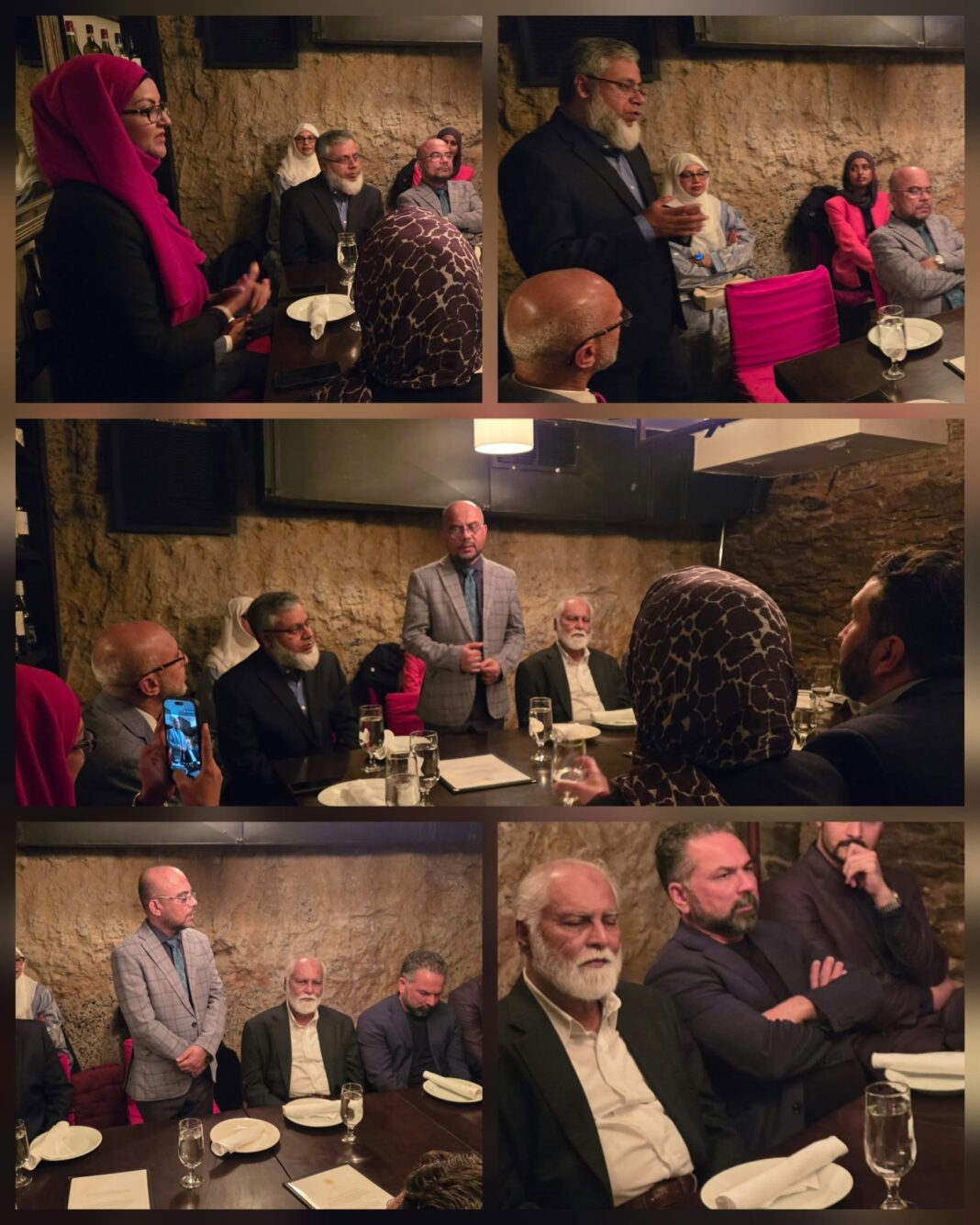
The commitment came Thursday evening, September 24, at a high-level discussion in Manhattan organized by Human Concern USA under the theme “Together for Stronger Partnership and Greater Impact.” The meeting, held on the sidelines of the 81st United Nations General Assembly, brought together representatives of humanitarian agencies, Muslim charities and donor organizations from different parts of the world.
The discussion focused on the deteriorating humanitarian situation in the Rohingya camps, declining international funding, access to education and the need for long-term programs aimed at securing a better future for the next generation.
Bangladesh’s State Minister for Disaster Management and Relief, M. Iqbal Hossain, and M. Mizanur Rahman, Commissioner for Refugee Relief and Repatriation, attended the event as guests of honor.
Mahmuda Khan, Global Chief Executive of Human Concern International, welcomed the participants. In her opening remarks, she highlighted Prime Minister Tarique Rahman’s address to the UN General Assembly and his proposals on the Rohingya crisis, urging international humanitarian organizations to strengthen coordination and work collectively.
Addressing the general debate of the 81st session of the UN General Assembly in Bangla on Thursday, Prime Minister Tarique Rahman said Bangladesh had been hosting more than 1.2 million Rohingya forcibly displaced from Myanmar for more than nine years.
“Bangladesh believes that the source and origin of the Rohingya crisis lie in Myanmar; therefore, its solution also lies there,” he said.
He called for the safe and dignified repatriation of the Rohingya to Myanmar and urged the United Nations and the international community to provide strong and effective support. He also called for continued life-saving humanitarian assistance until conditions are created for their return.
The prime minister warned that failure by the international community to ensure justice for the forcibly displaced Rohingya could turn the crisis into an even greater humanitarian emergency in the near future.
Speaking at the New York meeting, State Minister M. Iqbal Hossain said Prime Minister Tarique Rahman had brought renewed international attention to the Rohingya issue. He said the prime minister had also sought to engage China in efforts to resolve the crisis during his recent visit to the country.
“Bangladesh is not sitting idle while more than 1.2 million displaced people remain in a vulnerable situation,” the state minister said. He said the government was looking beyond immediate humanitarian needs and was also seeking ways to bring children and adolescents born and raised in the camps into education and help secure their future.
The crisis, he said, was no longer simply a question of food, shelter or medical assistance. It had become a long-term humanitarian and social challenge requiring coordinated action by the international community, donor agencies and nongovernmental humanitarian organizations.
Commissioner M. Mizanur Rahman outlined the growing management and funding challenges facing the Rohingya camps. He said shrinking international assistance had made it increasingly difficult to maintain humanitarian operations at the camps.
He noted that the United States remains among the largest donors to the Rohingya humanitarian response. However, with overall funding declining, the level of international assistance available per Rohingya refugee has also fallen significantly. The funding constraints, he said, are making it increasingly difficult not only to provide basic food and healthcare but also to establish a meaningful general education system for children in the camps.
Rahman also emphasized the need for long-term and coordinated programs for the Rohingya population. He praised the work of Human Concern International, saying the organization had already established itself as an important humanitarian actor working with the Rohingya community.
Masum Mahbub, Chief Executive of Human Concern USA, briefed participants on the organization’s ongoing programs in the Rohingya camps.
He said emergency relief alone would not be sufficient to address such a prolonged crisis. Comprehensive programs covering general education, vocational training, skills development and improved living conditions are essential, he said.
“A large proportion of this displaced population consists of children and young people,” Mahbub said. “If they are denied access to education and skills development, the crisis could become even more complicated in the future.”
He urged donor agencies, humanitarian organizations and the Bangladesh government to move quickly to develop and implement coordinated programs for the displaced population.
A major focus of the discussion was the proposed “Coalition for Pathway to Higher Education for Rohingya Children.” The initiative seeks to create opportunities for Rohingya children to pursue higher education and establish a longer-term framework of cooperation aimed at helping a displaced generation build a more sustainable future.
Organizations involved in the initiative include Human Concern USA, Human Concern International, Humaniti, ICNA Relief Canada, Penny Appeal USA, Baitulmaal and Penny Appeal Canada.
More than a dozen Muslim charities, donor organizations and humanitarian agencies represented at the meeting expressed support for greater collaboration on the Rohingya crisis. Participants pledged to work through a coordinated coalition on humanitarian assistance, education, skills development and longer-term programs for the displaced population.
Ibrahim Chowdhury, Editor of Prothom Alo North America, shared his recent firsthand observations from the Rohingya camps in Cox’s Bazar.
He said his recent visit had allowed him to see the realities facing the Rohingya population firsthand.
“This is not simply a refugee crisis,” Chowdhury said. “The future of an entire generation is tied to this crisis.”
He stressed that while the Rohingya issue is frequently discussed at major international forums, the commitments made at those forums must translate into meaningful action on the ground.
Chowdhury expressed hope that the Bangladesh government, international organizations and donor agencies would take rapid and coordinated steps to ease the humanitarian suffering of the displaced Rohingya population.
The New York meeting came at a time when the Rohingya crisis has once again received renewed attention during the 81st session of the UN General Assembly. Participants emphasized that until conditions are created for safe and dignified repatriation, humanitarian assistance, education and programs focused on the future of Rohingya children cannot be allowed to falter.
As the crisis enters another prolonged phase, participants agreed that stronger partnerships and better coordination among governments, international humanitarian organizations, Muslim charities and other donors will be increasingly important to prevent an already vulnerable population from facing an even deeper humanitarian crisis.