

The only lasting solution to the Rohingya crisis is their safe and dignified repatriation to Myanmar, where they were forcibly displaced from. But such a return will only be possible when conditions in Myanmar are safe and conducive to their return. The current situation in the country has made that prospect increasingly difficult, even as Bangladesh continues to pursue a long-term solution to the crisis.
At the same time, a new and deeply troubling issue is gaining attention: the future of Rohingya children and adolescents growing up in refugee camps in Bangladesh. The need to bring them under basic education and vocational training is increasingly being recognized. Keeping such a large population outside education and skills development for years could create an even greater humanitarian and social crisis—not only for Bangladesh, but for the wider international community.
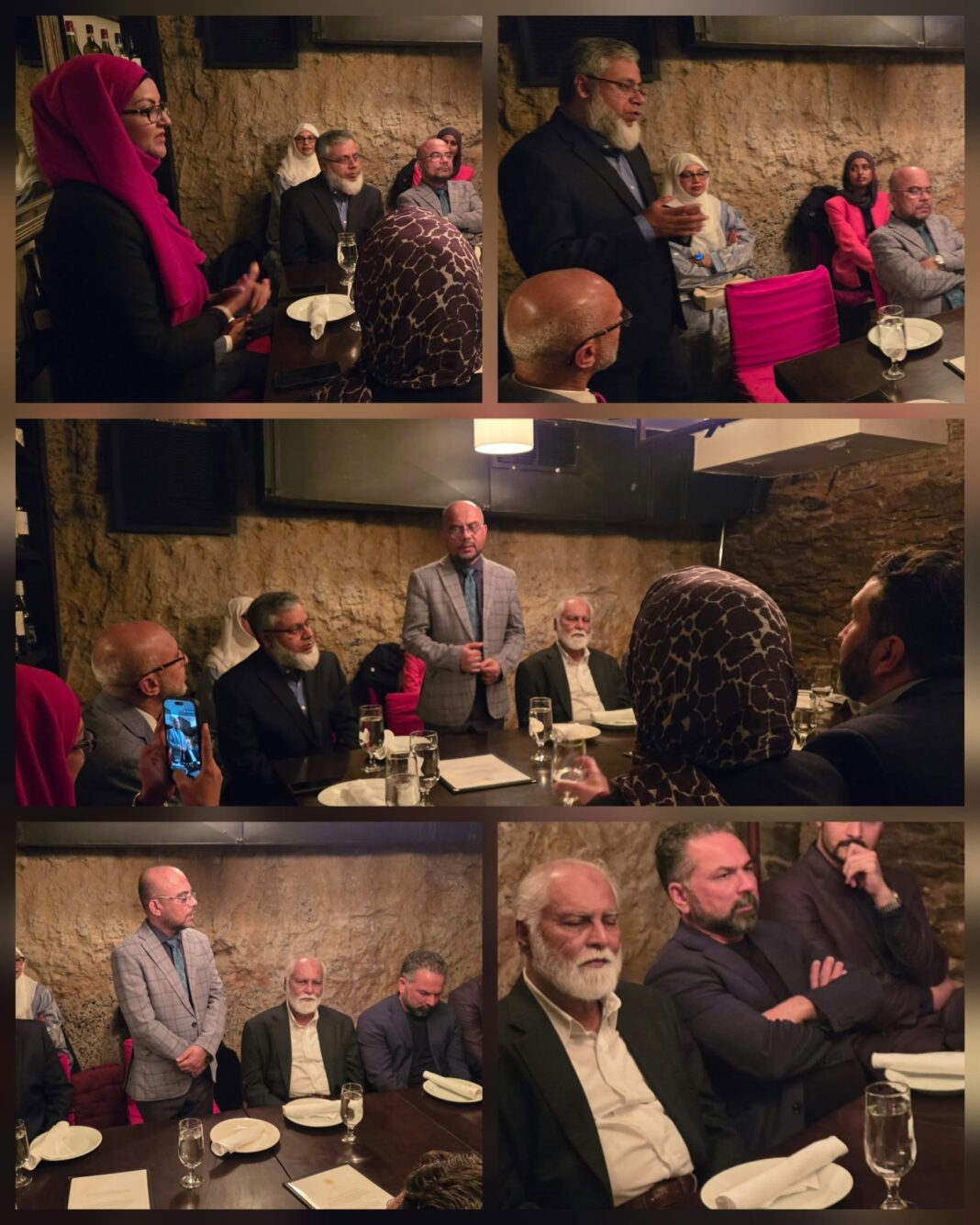
These concerns emerged prominently at a discussion on the Rohingya crisis held Tuesday, September 22, in New York, organized by Human Concern International (HCI).
The discussion brought together government representatives, officials directly involved in the Rohingya response, representatives of nongovernmental organizations and members of the Bangladeshi-American community. The event took place on the sidelines of the United Nations General Assembly, at a time when world leaders and senior officials from across the globe were gathering in New York.
The chief guest was M. Iqbal Hossain MP, State Minister for Disaster Management and Relief and a veteran politician. He was accompanied by Mohammed Mizanur Rahman, Refugee Relief and Repatriation Commissioner.
The discussion focused on the current state of the Rohingya crisis, declining international humanitarian assistance, the prospects for repatriation, the future of a generation born and raised in the camps, and the long-term challenges facing Bangladesh.
‘There is no alternative to safe repatriation’
State Minister M. Iqbal Hossain said there is no alternative to the safe repatriation of the Rohingya to their homeland if the crisis is to be resolved permanently.
But, he noted, repatriation cannot take place unless the circumstances that forced the Rohingya to flee Myanmar change. The current political and security situation in Myanmar has made the process even more complicated for Bangladesh.
Since the new government took office, he said, discussions on the Rohingya crisis have resumed and the government is also broadening its thinking about how to address the needs of those who remain in Bangladesh.
Particular attention, he said, must be given to children and adolescents growing up in the camps.
The government is considering steps to bring Rohingya children into basic education and vocational training, according to the minister.
He said that keeping such a large population outside education and skills development for an extended period would leave their own future uncertain and could eventually create broader challenges for Bangladesh and the international community.
The minister, who recently assumed responsibility for the ministry, also spoke of his commitment to working seriously on the issue and exploring practical ways to address the challenges facing the Rohingya population.
International attention is fading
Opening the discussion, Masum Mahbub, chief executive of Human Concern USA, said international attention to the Rohingya crisis has declined considerably compared with previous years. Humanitarian assistance has also fallen sharply.
More than 1.2 million displaced Rohingya are now living in Bangladesh, he said, making the crisis not merely a challenge for Bangladesh but a prolonged humanitarian crisis for the international community.
Mahbub stressed that bringing the Rohingya issue back to the center of international attention should be one of Bangladesh’s major priorities during this year’s UN General Assembly.
The longer the crisis continues, he warned, the greater the humanitarian and social risks will become.
Drawing on HCI’s experience working with Rohingya refugees, he said the humanitarian situation in Bangladesh could become increasingly difficult if the international community does not renew its attention and support.
‘We do not know when or how repatriation will happen’
Mohammed Mizanur Rahman, who has been directly involved in the Rohingya response since the beginning of the current phase of the crisis, provided an overview of the situation and its many dimensions.
He reiterated that there is no alternative to the safe repatriation of the Rohingya.
But when and how that repatriation can take place, he acknowledged, remains uncertain.
Rahman said the United States has played an important role in providing humanitarian assistance to the Rohingya. Although U.S. assistance has declined since President Donald Trump took office, he said the United States remains one of the largest donors to the Rohingya humanitarian response.
He thanked the American people for the humanitarian assistance funded through U.S. taxpayers’ money and also acknowledged the contribution of Bangladeshi-Americans.
There is an opportunity, he said, for Bangladeshi-Americans to become more involved in supporting efforts to address the humanitarian crisis.
A generation growing up without a future
Perhaps the most concerning part of Rahman’s presentation was his discussion of the children growing up inside the refugee camps.
He said a large number of children and adolescents born in the camps have still not been brought under basic education. New children are being born every day, while questions surrounding their future identity and citizenship remain unresolved.
With funding becoming increasingly limited, government agencies and humanitarian organizations are being forced to prioritize the most basic necessities of life—food, shelter, health care and other emergency assistance.
That leaves little room for longer-term programs focused on education and skills development.
Yet it is precisely within this reality, Rahman warned, that another crisis could be taking shape.
If a huge population remains deprived of education and skills for years, he said, their future will become increasingly uncertain. They could also become more vulnerable to drugs, crime and exploitation by various forces.
For that reason, he said, preparing for eventual repatriation must go hand in hand with protecting the dignity of the Rohingya and developing the capabilities of the younger generation.
He also emphasized the importance of the limited but meaningful work being carried out by nongovernmental organizations such as Human Concern International.
‘The reality may be even worse’
Shepa Uddin, a councilwoman from Franklin Township, New Jersey, said Bangladeshi-Americans need to learn more about the actual condition of the Rohingya refugees.
From a distance, she said, the community often learns about the crisis through reports from a handful of international news organizations. But hearing directly from government officials and people working with the refugees offered a deeper understanding of the situation.
The reality, she suggested, may be even more serious than what is visible through international media coverage.
She called for coordinated efforts involving the Bangladeshi government, nongovernmental organizations and the Bangladeshi-American community.
Community organizer Jalal Uddin said that although he had previously heard about the Rohingya crisis from different sources, listening directly to senior government officials and representatives of an organization such as Human Concern International had given him a much clearer sense of the scale and seriousness of the problem.
A crisis with no easy timeline
The discussion took place at a significant moment.
As heads of state and government gathered in New York for the United Nations General Assembly, Bangladesh was once again trying to draw international attention to one of the most difficult and prolonged humanitarian crises facing the country.
Yet, despite the presence of the Bangladeshi prime minister in New York, there was no clearly visible public seminar or community discussion on the Rohingya crisis as part of the prime minister’s program.
Meanwhile, in the camps of Cox’s Bazar, an entire generation is growing up.
Many of these children have never seen Myanmar.
Bangladesh is the only country they know.
That is perhaps the most difficult dimension of the Rohingya crisis.
On one side is repatriation—a solution that requires a safe and conducive environment in Myanmar.
On the other is a generation waiting in the camps, growing up with limited access to education and with an uncertain future.
The message emerging from the New York discussion was therefore clear: international diplomatic pressure and efforts toward repatriation remain essential, but so is a realistic plan for the dignity, education and future of the Rohingya until that day comes.
The ultimate solution to the Rohingya crisis lies in Myanmar.
But an entire generation growing up in Bangladesh cannot simply be left in the darkness while the world waits for that solution.
That may have been the most urgent concern to emerge from the discussion in New York.
Among those attending the discussion were Ibrahim Chowdhury, editor of Prothom Alo North America; Manzurul Huq, executive editor; reporter Manisha Dutta; Abu Chowdhury; Abdul Hai; and representatives of the media, civil society and the wider Bangladeshi-American community.