

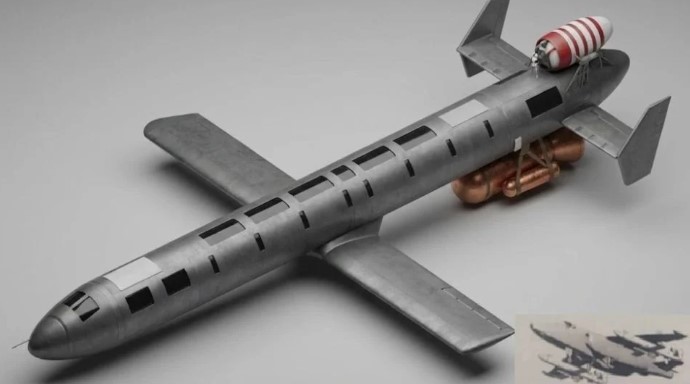
Russia’s ‘Geran-5’ Jet-Powered Drones Pose New Challenge to Ukraine’s Air DefensesRussia’s new generation of jet-powered drones, known as the Geran-5, is adding a new dimension to the use of military technology in the Ukraine war. Capable of speeds of around 600 kilometers per hour and operating at altitudes of up to 6,000 meters, the drones are creating a growing challenge for Ukraine’s existing air-defense systems.
Military experts say the drones’ combination of high speed, long range and the ability to be deployed in large numbers is blurring the traditional distinction between one-way attack drones and modern cruise missiles. As a result, maintaining effective air defenses is becoming increasingly complex and costly for Ukraine.
According to Katrina Bondar, a senior fellow at the Center for Strategic and International Studies (CSIS), the Geran-5 is essentially a Russian version of Iran’s Shahed-136 drone. The drones are being produced on a large scale in Russia’s Alabuga region.
Bondar said the range varies by version, from about 450 kilometers to more than 950 kilometers. While the drones generally travel at speeds of 300 to 400 km/h, the Geran-4 can reach around 500 km/h and the Geran-5 about 600 km/h.
Speed Creates New Air-Defense Challenge
Ukraine’s air-defense network was largely developed to counter slower, propeller-driven drones. In the past, machine guns, gun trucks and relatively inexpensive interceptor drones were able to destroy a significant proportion of Shahed-type drones.
The introduction of faster, jet-powered Geran variants has made that task more difficult.
Bondar said Ukrainian interceptor drones typically have maximum speeds of around 250 to 300 km/h, making it difficult for them to pursue and destroy targets traveling at roughly 600 km/h.
The newer Geran drones are also being equipped with electronic-warfare capabilities that can disrupt the video links used by interceptor drones during the final stage of an engagement.
Yuri Cherevashchenko, deputy commander of the Ukrainian Air Force, said another significant feature is that the drones can be controlled during flight. Operators can alter their flight paths and altitudes in response to instructions.
Russia Relies on Mass Drone Attacks
Beyond their technical capabilities, the sheer number of drones being deployed has added another layer of difficulty for Ukrainian air defenses.
According to Bondar, Russia used roughly 450 jet-powered drones in June, but that number rose to about 2,850 in August. In many of those attacks, she said, around 70% of the drones were jet-powered.
Large-scale attacks can place significant pressure on air-defense networks. Even if 90% of an 800-drone attack is intercepted, about 80 drones could still reach their intended targets.
Russia is also using decoys, attacks from multiple directions and changes in altitude to complicate Ukraine’s efforts to detect, track and intercept incoming drones.
James Patton Rogers, a drone expert at King’s College London, described the Geran-5 as an important stage in the evolution of one-way attack drones. Its combination of relatively low cost, higher speed and long-range capability could allow Russia to sustain repeated attacks over an extended period.
Ukraine Seeks New Ways to Counter the Threat
Ukraine is developing a new generation of interceptor drones to counter jet-powered systems. However, controlling interceptors at speeds exceeding 400 km/h presents its own technical challenges.
Ukraine is also considering a combination of low-cost guided missiles, electronic-warfare systems and jet-powered interceptors, alongside efforts to disrupt the production and supply networks supporting the drones.
Bondar said there is no single solution to the problem. Instead, she argued that Ukraine will need a combination of jet-powered interceptors, electronic warfare, short-range missiles and other air-defense capabilities.
A Shift in the Economics of Air Warfare
For analysts, the significance of systems such as the Geran-5 lies not only in their speed or technology but also in their ability to deliver long-range attacks at comparatively low cost.
Bondar has described the Geran-5 as effectively a “low-cost cruise missile.” In this model, large-scale drone attacks can keep an adversary’s air defenses occupied and potentially degrade them, while more expensive ballistic and cruise missiles can be reserved for important or heavily defended targets.
Rogers said one of the broader lessons for future air-defense systems is that developing sophisticated interceptors alone may not be enough. Countries will also need affordable ways to counter large numbers of drones, along with electronic-warfare capabilities and the ability to disrupt adversaries’ supply chains.