
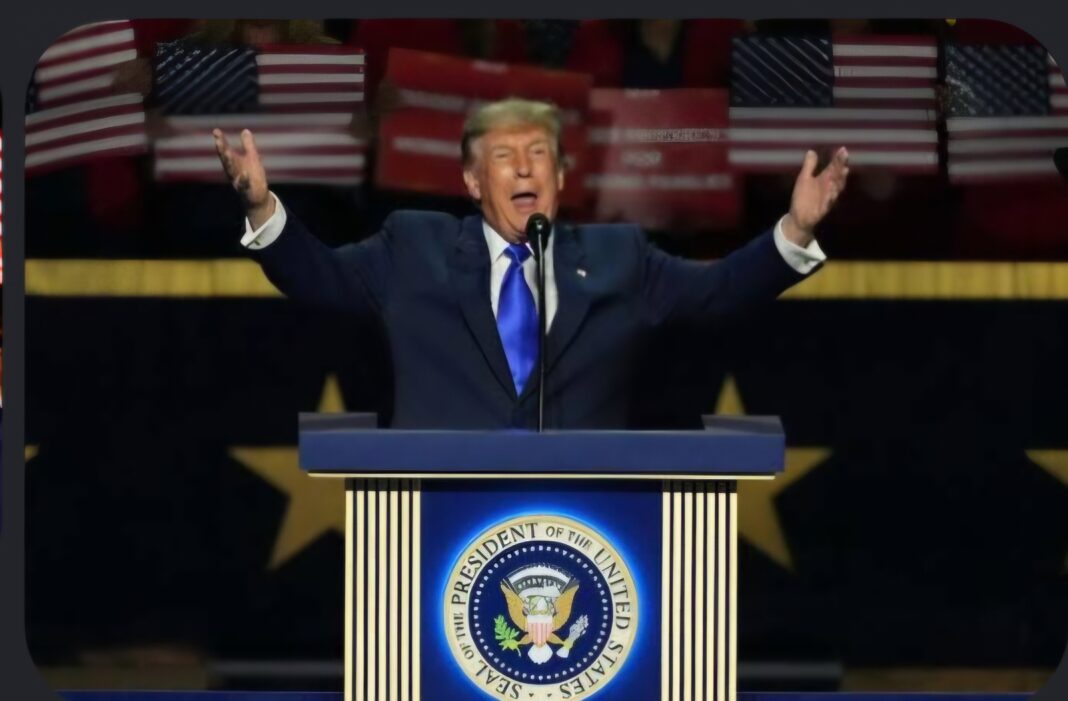
The United States has rarely seen a midterm election campaign as elaborate as the one now taking shape. On Wednesday night, Dallas hosted the Republican Party’s first full-scale midterm election conference, and President Donald Trump used the occasion to make a striking promise: if Republicans retain control of both the House of Representatives and the Senate, every adult American could receive $5,000.
Speaking before a crowd of 21,000 at the American Airlines Center, the usual home of the NBA’s Dallas Mavericks, Trump delivered a 1-hour-47-minute speech that placed him squarely at the center of the midterm campaign—even though his name will not be on the ballot.
Trump compared his proposed payment to the distribution of profits among shareholders of a successful company. Citing what he described as the “unbelievable success” of the US economy, he presented the money as a kind of dividend owed to the American people.
The proposal, however, immediately raises questions about its fiscal implications. With the US national debt already approaching $40 trillion, financing payments that could cost more than $1 trillion would be a major challenge.
Trump has made similar promises before. During the COVID-19 pandemic, he pushed for $2,000 stimulus payments, but then-Senate Majority Leader Mitch McConnell resisted the proposal, citing inflation concerns, and the amount was ultimately reduced to $600. The Biden administration later added another $1,400, while critics subsequently blamed the stimulus measures for contributing to inflation, which reached an annual rate of 9.1% in June 2022.
Trump has also previously suggested using tariff revenue and reductions in government spending to finance a dividend for Americans. That promise, however, has yet to materialize.
Trump Puts Himself at the Center of the Midterms
Throughout the speech, Trump appeared determined to make the election a referendum on his presidency.
He urged supporters to imagine that he himself was on the ballot, giving him a mandate to complete what he called his “unfinished business.” He portrayed the election as a choice between what he described as radical left-wing socialism and his populist agenda.
Warning voters that border security, tax cuts, protection and prosperity could all be at stake, Trump argued that a Republican defeat would leave the country spending the next decade simply trying to regain its footing.
Iran also featured prominently in his remarks.
Trump blamed the prolonged conflict with Iran for high inflation and elevated energy prices, and accused Tehran of wanting Republicans to lose the election. He claimed Iran hoped to negotiate with a weaker Democratic administration and ultimately secure a path to nuclear weapons.
Trump predicted that the war would end shortly after the election and that oil prices would subsequently fall sharply—another prediction that echoes promises he has made in the past.
Attacks on Democratic Rivals
Trump also used the Dallas stage to target political opponents by name.
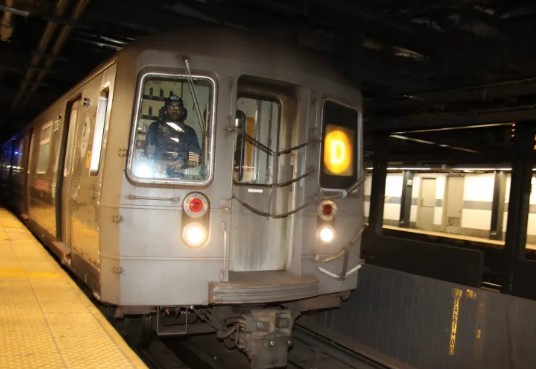
He criticized North Carolina’s Roy Cooper, comparing him with 1980s Democratic presidential nominee Michael Dukakis. Trump accused Cooper of allowing a habitual offender to remain free, allegedly contributing to the killing of Iryna Zarutska on public transportation.
He also mocked Texas Democrat James Talarico over his promotion of vegetarianism and leveled harsh criticism at Michigan Democrat Abdul El-Sayed, including allegations involving his family relationships.
The claims against the Democrats were not independently verified.
Fetterman Fuels Party-Switch Speculation
One of the conference’s most striking moments came through a video message from Pennsylvania Senator John Fetterman.
The Democratic senator praised Republican colleague Dave McCormick while criticizing socialism and what he described as an “anti-American way of life.” His appearance immediately fueled speculation about whether he could eventually leave the Democratic Party.
The event also took an unusual turn when a large screen displayed a selfie of Israel critic Hasan Piker wearing only underwear. Although sensitive portions of the image were blurred, its inclusion left many in the audience surprised and raised questions about the purpose of the display.
Politics Meets Entertainment
The conference featured several prominent figures from the Trump administration and a new generation of Republican personalities.
Treasury Secretary Scott Bessent spoke about private-sector job growth and the “Trump Accounts” initiative for newborns. Dr. Mehmet Oz, head of the Centers for Medicare & Medicaid Services, discussed efforts to reduce drug prices and joked about the physical appearance of members of the audience while discussing expanded coverage for weight-loss medications.
A number of younger Republican figures also took the stage, including the De La Cruz siblings from Texas, former NFL player Jay Feely and former Michigan military officer Mike Buschart.
The appearance of UFC fighters Justin Gaethje and Bo Nickal gave the political gathering an unmistakably entertainment-oriented flavor—another reflection of the increasingly blurred lines between politics, celebrity and popular culture in modern America.
Politics and Football Compete for Attention
There was another curious coincidence that night: the opening game of the new NFL season was being played across the country.
The New England Patriots faced the Seattle Seahawks in a rematch of the Super Bowl, drawing enormous attention from American sports fans. Politics and football, in effect, competed for viewers on the same night.
A High-Stakes Midterm Election
The November 3 midterm elections are expected to determine the political direction of the final two years of Trump’s second term.
During his first presidency, Republicans lost 41 House seats in the midterms. Determined to avoid a repeat, Trump announced the unusual Dallas conference just two months ago.
Democrats, meanwhile, have already warned that if they regain power, they will seek to block Trump’s agenda and could even pursue impeachment.
Republicans are also facing concerns over declining support among Hispanic voters, according to polling, adding urgency to their campaign efforts. The party is responding with a combination of economic promises—including Trump’s proposed $5,000 dividend—and a hard-line approach to immigration.
The night in Dallas offered a striking snapshot of contemporary American politics: promises and propaganda, humor and attacks, entertainment and anxiety all packed into a single political spectacle.
Whether Americans will actually receive that promised $5,000 remains entirely dependent on the outcome of the November election. Until then, it remains a political pledge—uncertain in its prospects, but already significant in its political impact.